
Kofun
Kyoto · 古墳Browse Kyoto’s cultural heritage from the Kofun period (300 – 538). Filter by type and keyword, with concise stories, maps, and travel tips.
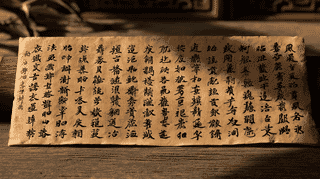
Discover Shinso Senjimon, a National Treasure of Japan. This masterpiece by Zhiyong, a descendant of Wang Xizhi, showcases 1,000 characters in both regular and cursive scripts. Learn about its history, significance, and how to view this Tang Dynasty treasure.
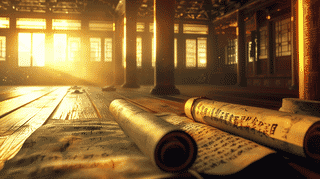
Discover Meihoki, a 7th century Chinese Buddhist manuscript preserved as a National Treasure at Kyoto's Kosanji Temple. This rare collection of karmic tales survived only in Japan, offering unique insights into Tang Dynasty Buddhism.
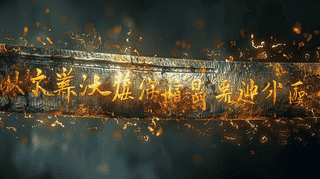
Explore the dramatic discovery of Japan's oldest readable text - 115 gold-inlaid characters hidden for centuries on an ancient sword. Visit the Sakitama Museum near Tokyo to see authentic 5th-century artifacts that proved Japan's early unification.
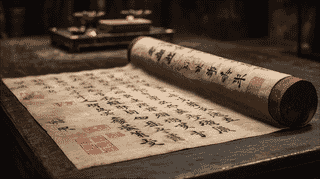
Discover the Sōranjō (Mourning Disorder Letter), a National Treasure of Japan preserving the calligraphy of Wang Xizhi, the greatest calligrapher in Chinese history. Learn about this Tang Dynasty masterpiece at the Museum of the Imperial Collections, Tokyo.
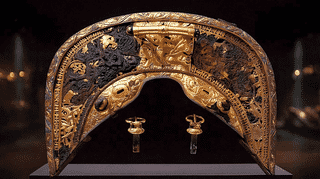
Discover the Fujinoki Kofun artifacts, a National Treasure collection of 12,000+ items including gilt-bronze saddle fittings, crowns, and shoes from a 6th-century royal tomb near Horyuji Temple in Nara, Japan.

Held privately in Kyoto, this Important Cultural Property is a stone Buddhist relief dated to Kaiyuan 12 (724 CE). One of the famed Baoqing Temple group that once adorned Empress Wu Zetian's Seven-Treasure Platform in Tang Chang'an, it represents the High Tang synthesis of Indian Gupta and Chinese sculptural traditions.
Housed at the Kyoto National Museum, these five 3rd-century bronze mirrors unearthed in 1921 from Akazuka Kofun in Usa City, Oita Prefecture, are designated Important Cultural Properties. Chiefly triangular-rimmed deity-and-beast mirrors, they share molds with mirrors from tumuli across Japan, offering rare evidence of the early Yamato polity's reach and illuminating the great Queen Himiko debate.
Discover the Henkei Hōkaku Kamon-kyō, an Important Cultural Property held by the Kyoto National Museum. Cast in bronze in early Kofun-period Japan around the 4th century, this remarkable wakyō mirror reinterprets the Chinese Han-dynasty TLV design, replacing the Four Divine Beasts with elegant whirl patterns. Its decorative band wrapping around onto the polished face is almost unique in East Asian bronze mirror history.
Preserved at the Kyoto National Museum, this manuscript carries the Benmeiron, or 'Discourse on Discriminating Fate,' from volume fifty-four of the Wen Xuan—the oldest surviving anthology of Chinese literature, compiled by Crown Prince Xiao Tong of the Liang dynasty. Reaching Japan by the Nara period and treasured by Heian-era aristocrats, manuscripts of the Wen Xuan reveal the deep cultural ties between Japan and continental East Asia. A meaningful destination for travelers drawn to classical Chinese thought, calligraphic beauty, and the literary world that shaped Japan's classical age.
The Yamashina Nishinoyama Kofun Excavated Artifacts, designated a National Treasure in 1953 and housed at the Kyoto University Museum, are an extraordinary collection of early Heian period grave goods. Featuring a gold-mounted great sword, a gold-and-silver twin-phoenix mirror, and stone belt ornaments befitting the highest court nobility, these artifacts are believed to have come from the tomb of Sakanoue no Tamuramaro — the legendary Sei-i Taishogun who pacified northern Japan and founded Kiyomizu-dera Temple.
The Otokuni Kofun Group is a remarkable cluster of 13 ancient burial mounds spanning Kyoto City, Mukō, Nagaokakyō, and Ōyamazaki, tracing 400 years of regional power from the 3rd to 7th century. As one of the few sites in Japan where chieftain tombs were continuously built across the entire Kofun period, it serves as a microcosm of ancient political dynamics. The largest mound, Egenoyama Kofun (128m long), yielded over 700 iron weapons and is now preserved as a public park.
Discover the Ōhi, a rare National Treasure Buddhist shoulder cloth from Tang-dynasty China, brought to Japan by the monk Kūkai. Deposited at the Kyoto National Museum, this exquisite textile reveals over 1,200 years of Shingon Buddhist history.
Discover the Important Cultural Property artifacts from Shibagahara Kofun in Joyo, Kyoto. Bronze bracelets, mirrors, and jade from the 3rd century reveal the dawn of Japan's Kofun era.
Discover the Gyokuhen (Yupian) Volume 27 at Kōzan-ji Temple in Kyoto—a National Treasure and Tang dynasty manuscript of the oldest Chinese character dictionary, lost in China but preserved in Japan for over 1,400 years.
Discover the Kenda Kokushi Kesa, a National Treasure Buddhist vestment brought to Japan by Kukai from Tang Dynasty China. Housed at the Kyoto National Museum, this 8th-century tapestry-weave masterpiece reveals the roots of Shingon Buddhism.
Discover the Chunqiu Jingzhuan Jijie Volume 2 Fragment, a rare Tang dynasty manuscript and National Treasure housed at the Yūrinkan Museum in Kyoto. Learn about its history, significance, and how to visit.
This National Treasure at the Kyoto National Museum is the oldest surviving copy of the Chinese classic Shishuo Xinyu, in seventh-century Tang regular script.
Discover the Dailōtan-kyō Volume 3, a National Treasure Buddhist sutra copied in 673 CE during the Tang Dynasty. Housed at Chion-in temple in Kyoto, this ancient cosmological scripture offers a rare glimpse into early Buddhist manuscript culture.
Tobatsu Bishamonten at Kyoto's To-ji, a Tang-dynasty National Treasure that once guarded Rashomon gate. The 189.4 cm figure stands on the palms of the earth goddess.
Designated a National Important Cultural Property, this collection from the late fifth-century Butai No. 1 Tumulus in Maebashi—including house-shaped haniwa, hundreds of talc miniatures, and rare clay food-offering vessels—vividly evokes a Kofun-period funerary ritual. The items, owned by the State, are on view at the Gunma Prefectural Museum of History in Takasaki.