
Edo
Kyoto · 江戸Browse Kyoto’s cultural heritage from the Edo period (1603 – 1868). Filter by type and keyword, with concise stories, maps, and travel tips.
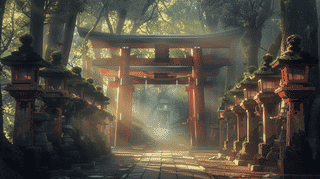
Kamo Mioya Shrine in Kyoto, known as Shimogamo, holds two National Treasure sanctuaries of 1863 and 31 Important Cultural Property buildings of 1629, listed as one.
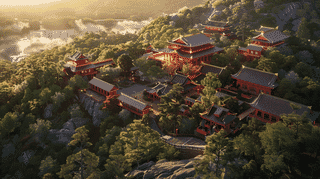
Experience the 1,160-year-old Iwashimizu Hachimangu Shrine, a National Treasure featuring rare Hachiman-zukuri architecture, imperial history, and surprising connections to Edison's light bulb. Just 30 minutes from Kyoto without the crowds.
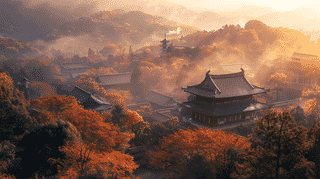
Discover Daitoku-ji Temple, Kyoto's 700-year-old Zen complex housing National Treasures and revolutionary gardens. Birthplace of Japanese tea ceremony and wabi-sabi aesthetics, this temple village offers authentic cultural immersion beyond typical tourism.
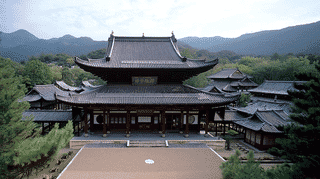
The head temple of the Obaku school at Uji, Kyoto. Its layout and its manner alike follow Chinese Buddhist building of the late Ming and the early Qing.
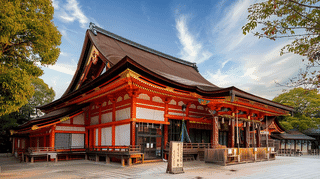
A shrine hall in Gion, Kyoto, seven bays by six, with three bays projecting at the back. Built in 1654, it was designated a National Treasure in 2020.
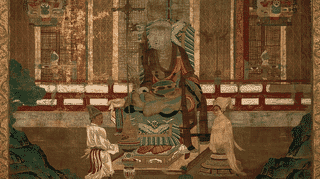
A Buddhist painting in sixteen scrolls owned by Seiryoji in Kyoto. The record gives its country as Song and its period as Northern Song, not as Japan.
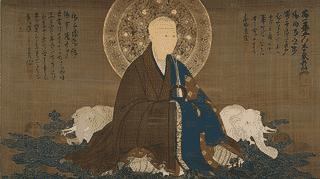
A Southern Song painting on one scroll at Tofukuji, Kyoto, showing the full figure. It came down in a single box with a second scroll of the same title.
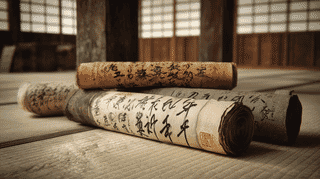
An autograph record at the Yomei Bunko in Kyoto Prefecture. The body of it copies out those very court documents that were designated alongside them all.
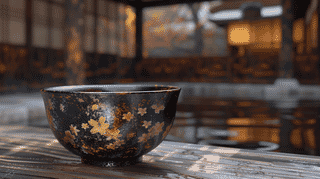
A Southern Song tea bowl held at Shokokuji in Kyoto Prefecture. On the inside, the pattern is formed exactly where the upper glaze was simply left off.
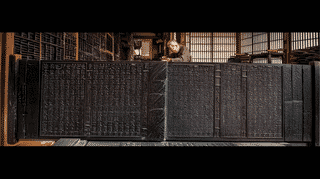
48,275 Edo-period printing blocks at Hozoin in Kyoto, counted to the single block. The scriptures printed from them are recorded apart from these ones.

Old documents at Yasaka Shrine in Kyoto Prefecture. The title counts 2,205 separate pieces, while the quantity field counts the scrolls that hold them.
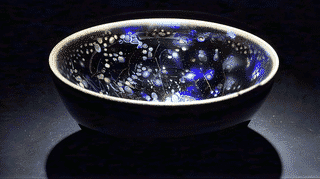
A tea bowl held at Ryukoin in Kyoto Prefecture. Yet another bowl of the very same name is recorded there under a different system of listing altogether.
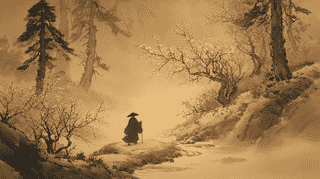
Six Edo-period handscrolls owned by the state and kept in Kyoto. Picture and text alike are attributed quite separately in the official record itself.

Discover Kano Sansetsu's Snowy Shore with Waterfowl, an Important Cultural Property of Japan held on deposit at the Kyoto National Museum. This pair of six-panel folding screens by the second-generation head of the Kyo Kano school depicts a moonlit winter coast where silver-leaf waves and countless waterfowl create one of the most haunting visions of early Edo painting.
Discover the Cloud Dragon Ink Painting (Unryūzu) by Edo-period master Maruyama Ōkyo, an Important Cultural Property of Japan. Learn about its powerful sumi-ink technique and how to view it at the Kyoto National Museum.
Discover the Persian Manuscript in Japan, a remarkable 13th-century document brought from Song-dynasty Quanzhou by the monk Keisei. This Important Cultural Property contains Persian poetry and reveals the vibrant maritime Silk Road connections between medieval Japan, China, and Persia.
The Fukui Family Kyōmasu-za Related Materials, an Important Cultural Property of Kyoto Prefecture, comprise 2,139 items including documents, maps, actual reference measuring boxes, and a branding iron passed down in the Fukui family, who held the exclusive shogunate authority to manufacture, sell, and inspect official measures for the 33 provinces of western Japan. Designated in 1990, it is the sole surviving archive of a shogunate-authorized measuring guild, offering irreplaceable insight into Edo-period weights and measures administration.
An Important Cultural Property of Japan held privately in Kyoto Prefecture. This hanging scroll is a Zen ink-trace (bokuseki) brushed in 1268 by the Southern Song Chan master Wu'er Kexuan (also known as Shiqiao Kexuan), giving a verse-poem to his disciple Ming, who served as the temple's head of guests. As a precisely dated late-Southern-Song original, it is a primary document of Sino-Japanese Zen exchange and an exemplar of the calligraphy that came to be revered as the highest form of hanging scroll in the Japanese tea ceremony.
This Important Cultural Property is an ink calligraphy (bokuseki) by Lingshi Ruzhi, a Yuan-dynasty Chan monk and direct disciple of the celebrated master Xutang Zhiyu. Written in 1330 as a gatha for the monk Zhèngtáng, this work connects the spiritual lineage of Rinzai Zen with Japan's tea ceremony culture and is privately held in Kyoto Prefecture.
Discover Yosa Buson's masterpiece "Yashoku Rōdai-zu" (Night Scene of Towers and Pavilions), a National Treasure of Japan. This late 18th-century ink painting captures a snowy Kyoto night with breathtaking subtlety. Learn about its artistic significance, viewing opportunities, and Buson-related sites in Kyoto.