
Momoyama
Kyoto · 安土桃山Browse Kyoto’s cultural heritage from the Momoyama period (1573 – 1603). Filter by type and keyword, with concise stories, maps, and travel tips.
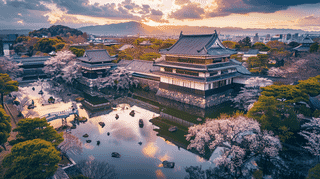
Nijo Castle in Kyoto, occupied by Ieyasu in 1603 and remodelled in 1626, holds Japan's only surviving castle palace: six National Treasure shoin buildings in echelon
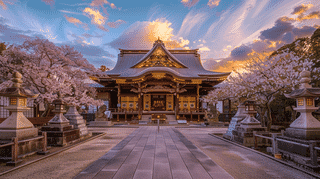
A shrine in Kamigyo Ward, Kyoto, where a stone chamber joins the main hall to the worship hall, with a pair of music rooms adjoining on either side of it.
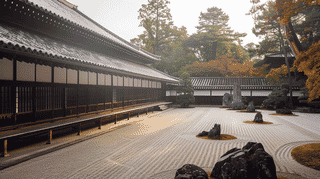
A building at Nanzenji in Kyoto in which a greater and a lesser hall join to form one. The official record lists all of its rooms one by one, by name.
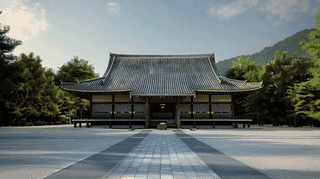
A temple hall at Ninnaji in Kyoto, seven bays by five. It was the Shishinden of the imperial palace, moved here in 1643 and serving as a hall ever since.
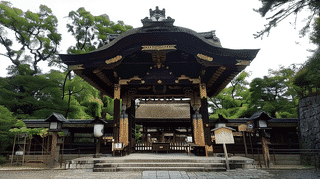
A four-legged gate of the Momoyama period at Toyokuni Shrine in Kyoto. It is said to have come from Fushimi Castle by way of two other sites before this.
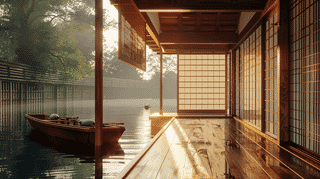
A three-storey pavilion at Honganji in Kyoto. Its north and south faces agree at 25.8 metres while its east and west faces do not agree with each other.
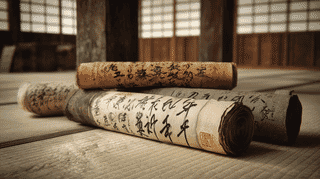
An autograph record at the Yomei Bunko in Kyoto Prefecture. The body of it copies out those very court documents that were designated alongside them all.
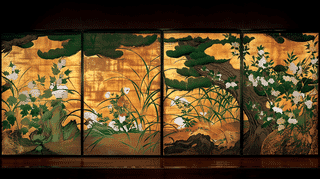
A pair of Momoyama folding screens at Chishakuin in Kyoto. The official record names no artist at all, and the title itself is written to show that gap.

Discover the National Treasure imperial letter (shinkan) written by Emperor Go-Yōzei to Shōren-in Temple in Kyoto. Learn about its historical significance, exquisite calligraphy, and the dramatic events of 1596 Japan.
The Main Hall of Obai-in at Daitoku-ji, Kyoto, built in 1586 and designated in 1922, holds forty-four ink panels by Unkoku Togan and faces the Hatotei dry garden.
Discover the Kanchi-in Guest Hall (Kyakuden), a National Treasure within the UNESCO World Heritage Toji Temple complex in Kyoto. Explore Momoyama-era shoin architecture, ink paintings attributed to Miyamoto Musashi, and serene Zen gardens.
Rebuilt in 1603 by Toyotomi Hideyori, the National Treasure Kondo at To-ji fuses Japanese, Zen and Great Buddha styles and holds a 2.88-meter seated Yakushi triad.
At Kyoto's Tō-ji, the East Great Gate has stayed shut for centuries. Called the Akazu-mon, it was barred by Ashikaga Takauji in 1336 and still bears arrow marks.
To-ji's widest gate was not built for it. Raised in 1601 as Sanjusangen-do's west gate by Toyotomi Hideyori, it moved here in 1895, an Important Cultural Property.
Discover the Otamaya at Kodaiji Temple in Kyoto, an Important Cultural Property built in 1605. Marvel at the stunning Kodaiji Makie lacquerware, explore the mausoleum of Toyotomi Hideyoshi and his wife Nene, and experience the splendor of Momoyama-period art and architecture.
Discover Koubai-in Main Hall, an Important Cultural Property within Kyoto's Myoshin-ji Temple complex. Built in 1604, this exquisite Zen hojo-style hall features a karesansui garden, historic fusuma paintings, and deep ties to the reviver of one of Japan's greatest Zen temples.
Discover the Sanbo-in Karamon Gate, a National Treasure at UNESCO World Heritage Daigo-ji Temple in Kyoto. Built in 1599, this stunning black-lacquered gate with gold chrysanthemum and paulownia crests embodies the grandeur of the Momoyama period and the legacy of Toyotomi Hideyoshi's famous cherry blossom viewing.
Explore the Sanbo-in Hall Complex (Important Cultural Property) at the UNESCO World Heritage Daigo-ji Temple in Kyoto. Discover the Goma-do, Shinden, Junjo-kan, and other magnificent Momoyama-period buildings connected to Toyotomi Hideyoshi's legendary cherry blossom viewing party.
The Main Hall of Shōden-ji in northern Kyoto is an Important Cultural Property originally built as the formal reception hall of Fushimi Castle during the Azuchi-Momoyama period. Discover its Kanō Sanraku sliding-door paintings, the haunting blood ceiling from the Battle of Fushimi, and the celebrated dry landscape garden with borrowed scenery of Mount Hiei.
Discover the Yorinoan Shoin of Jodoin, an Important Cultural Property relocated from Fushimi Castle, featuring Kano school paintings and a refined dry landscape garden inside the World Heritage Byodoin Temple grounds in Uji, Kyoto.