
Asuka
Kyoto · 飛鳥Browse Kyoto’s cultural heritage from the Asuka period (538 – 710). Filter by type and keyword, with concise stories, maps, and travel tips.
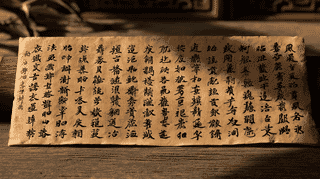
A Chinese calligraphy album in Kyoto Prefecture, the Thousand Character Classic written twice in two scripts. The Agency leaves the maker field blank.
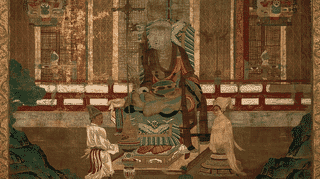
A Buddhist painting in sixteen scrolls owned by Seiryoji in Kyoto. The record gives its country as Song and its period as Northern Song, not as Japan.
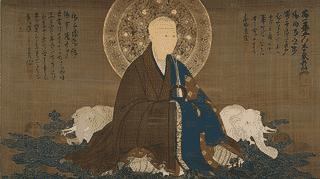
A Southern Song painting on one scroll at Tofukuji, Kyoto, showing the full figure. It came down in a single box with a second scroll of the same title.
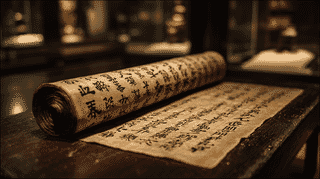
An Asuka-period sutra scroll owned by the state in Kyoto Prefecture. Its own colophon fixes the cyclical year, and the record enters 686 as the date of it.
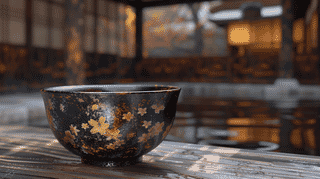
A Southern Song tea bowl held at Shokokuji in Kyoto Prefecture. On the inside, the pattern is formed exactly where the upper glaze was simply left off.
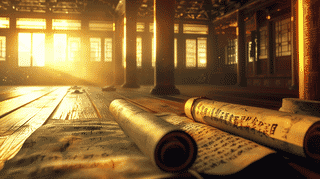
Three Tang-dynasty scrolls at Kosanji in Kyoto Prefecture. The country field of the official record reads China here, and it does not read Japan at all.
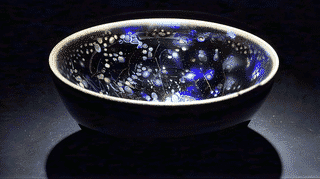
A tea bowl held at Ryukoin in Kyoto Prefecture. Yet another bowl of the very same name is recorded there under a different system of listing altogether.
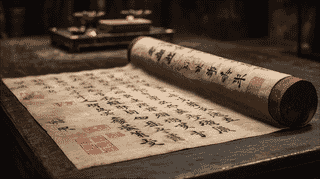
A Tang-dynasty copy of a letter by Wang Xizhi, kept in Tokyo. Nothing at all in his own hand survives, and so the copy itself is now the treasure here.

Discover the Persian Manuscript in Japan, a remarkable 13th-century document brought from Song-dynasty Quanzhou by the monk Keisei. This Important Cultural Property contains Persian poetry and reveals the vibrant maritime Silk Road connections between medieval Japan, China, and Persia.
Held privately in Kyoto, this Important Cultural Property is a stone Buddhist relief dated to Kaiyuan 12 (724 CE). One of the famed Baoqing Temple group that once adorned Empress Wu Zetian's Seven-Treasure Platform in Tang Chang'an, it represents the High Tang synthesis of Indian Gupta and Chinese sculptural traditions.
An Important Cultural Property of Japan held privately in Kyoto Prefecture. This hanging scroll is a Zen ink-trace (bokuseki) brushed in 1268 by the Southern Song Chan master Wu'er Kexuan (also known as Shiqiao Kexuan), giving a verse-poem to his disciple Ming, who served as the temple's head of guests. As a precisely dated late-Southern-Song original, it is a primary document of Sino-Japanese Zen exchange and an exemplar of the calligraphy that came to be revered as the highest form of hanging scroll in the Japanese tea ceremony.
Preserved at the Kyoto National Museum, this manuscript carries the Benmeiron, or 'Discourse on Discriminating Fate,' from volume fifty-four of the Wen Xuan—the oldest surviving anthology of Chinese literature, compiled by Crown Prince Xiao Tong of the Liang dynasty. Reaching Japan by the Nara period and treasured by Heian-era aristocrats, manuscripts of the Wen Xuan reveal the deep cultural ties between Japan and continental East Asia. A meaningful destination for travelers drawn to classical Chinese thought, calligraphic beauty, and the literary world that shaped Japan's classical age.
Discover the Uji Bridge Danpi (Ujibashi Danpi), one of Japan's oldest surviving stone monuments dating back to 646 CE. Located at Hashidera Hojoin Temple in Uji, Kyoto, this Important Cultural Property reveals the origins of the ancient Uji Bridge.
Discover the Ōhi, a rare National Treasure Buddhist shoulder cloth from Tang-dynasty China, brought to Japan by the monk Kūkai. Deposited at the Kyoto National Museum, this exquisite textile reveals over 1,200 years of Shingon Buddhist history.
Discover the National Treasure bokuseki calligraphy by Chinese Chan master Xutang Zhiyu, preserved at Daitoku-ji temple in Kyoto. Learn about its Zen heritage, tea ceremony significance, and how to view this masterpiece.
Discover the Gyokuhen (Yupian) Volume 27 at Kōzan-ji Temple in Kyoto—a National Treasure and Tang dynasty manuscript of the oldest Chinese character dictionary, lost in China but preserved in Japan for over 1,400 years.
Discover the Kenda Kokushi Kesa, a National Treasure Buddhist vestment brought to Japan by Kukai from Tang Dynasty China. Housed at the Kyoto National Museum, this 8th-century tapestry-weave masterpiece reveals the roots of Shingon Buddhism.
A National Treasure of Shōjōke-in, Kyoto: a Southern Song Amida triad in three signed scrolls by the Ningbo painter Fuetsu, now held at the Kyoto National Museum.
Ninna-ji's National Treasure Kujaku Myōō, a Song-dynasty Chinese painting, shows the Peacock Wisdom King with three faces and six arms on a white peacock.
Two Southern Song scrolls at Kyoto's Konchi-in, the Autumn and Winter Landscapes are a National Treasure once owned by the Ashikaga shoguns and ascribed to Huizong.