
National Treasures of Shiga
滋 賀 県 の 国 宝Shiga’s national treasures — properties designated kokuhō for their exceptional value to the nation.
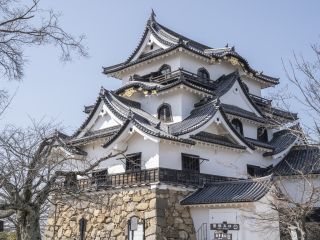
The keep of Hikone Castle in Shiga, finished in 1606, has three tiers with gables and stepped roofs. It and its two turrets became National Treasures in 1952.
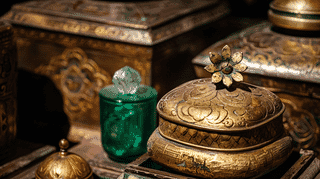
Finds from the site of Sufukuji in Otsu, Shiga, recovered in 1938 from a cavity in the pagoda's foundation stone. Four nested containers held three crystal relics.
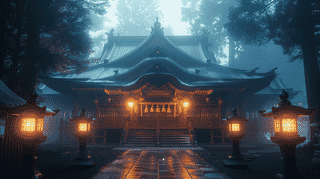
A hall of 1640 at Enryakuji on Mount Hiei in Shiga. Its earthen inner sanctuary lies three metres below the boarded worship space, keeping the basic esoteric plan.
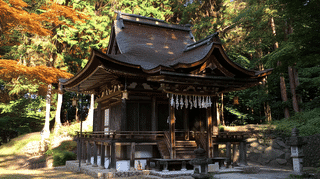
A middle Muromachi-period shrine hall in Shiga Prefecture. Its own name and its address here use two quite different characters for the one same sound.
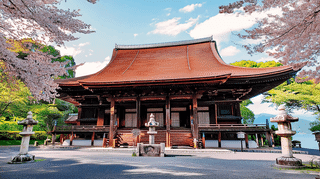
A Momoyama-period golden hall in Shiga Prefecture, dated to 1599. Its commentary field stands empty, while the structural field of it is a fuller one.
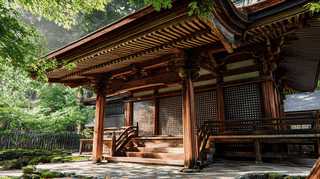
An early Muromachi hall in Shiga Prefecture, rebuilt in 1347. A temple building, it is filed here under the shrines rather than under any temples at all.
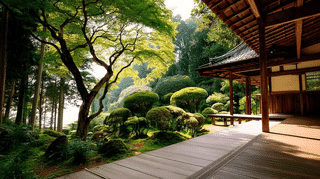
A Momoyama-period guest hall in Shiga Prefecture, built in the year 1600. Its category field here reads residence rather than temple or else a shrine.
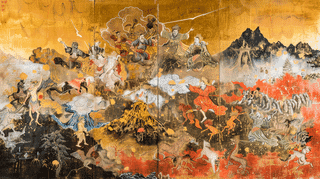
A Kamakura-period painting in several scrolls at Shojuraigoji in Otsu, Shiga. A copy of the work itself carries a prefectural listing entirely of its own.
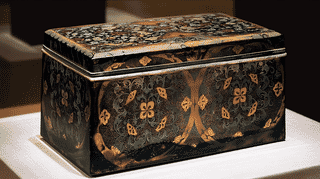
A Heian-period sutra box owned by Enryakuji in Shiga Prefecture. Gold marks out the flowers and the rings, and silver marks out the leaves and the stems.
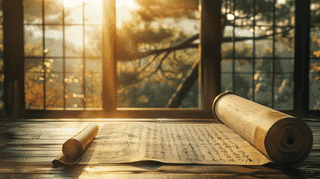
A Tang-period text owned by Enryakuji in Shiga Prefecture. Its own country field reads China, while its own period field gives the Tang dynasty of it.
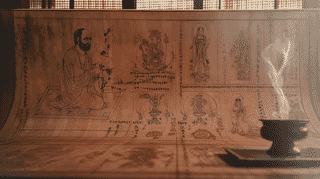
A Heian-period scroll of iconographic drawings at Onjoji in Shiga, lacking its opening. A complete scroll shares the very same designation number with it.

A National Treasure cast in 858 on Mt. Hiei, this bell bears a dated mirror-script inscription and is Japan's sixth oldest dated bell, now at the Sagawa Art Museum.
The National Treasure tahoto of Ishiyama-dera in Otsu, dated by inscription to 1194, is the oldest tahoto with a known year. Its form, Kaikei's Dainichi, visiting.
The National Treasure main hall of Ishiyama-dera in Otsu joins a sanctuary rebuilt in 1096 to a 1602 worship hall on stilts. Sealed Kannon, Genji Room, fees.
A 1601 reception hall at Mii-dera in Otsu, Shiga, and a classic of shoin-zukuri, with Kano Sanraku paintings and a garden pond at its veranda. Open by booking only.
The medieval main hall of Kongorinji in Aisho, Shiga, a National Treasure since 1952, a large Japanese-style esoteric hall traditionally dated 1288.
The late Kamakura three-storied pagoda of Saimyoji in Kora, Shiga, a National Treasure since 1952, its first storey painted inside in brilliant colour.
The Kamakura main hall of Saimyoji in Kora, Shiga, a National Treasure since 1952, enlarged from five to seven bays square and a representative Japanese-style hall.
The three-storied pagoda of Jorakuji in Konan, Shiga, built around 1400 and a National Treasure since 1953, with textbook proportions.
The early Muromachi main hall of Jorakuji in Konan, Shiga, a National Treasure since 1953, rebuilt after 1360 and a representative Japanese-style hall.
More from Shiga
Shiga’s registered properties across designations, with featured heritage and travel notes.
The complete kokuhō catalogue — browse by prefecture, period, and category.
Nationwide jūyō bunkazai — architecture, sculpture, painting, crafts, and documents.