
Edo
江戸Browse Japan’s cultural heritage from the Edo period (1603 – 1868). Filter by prefecture, type, and keyword, with concise stories, maps, and travel tips.
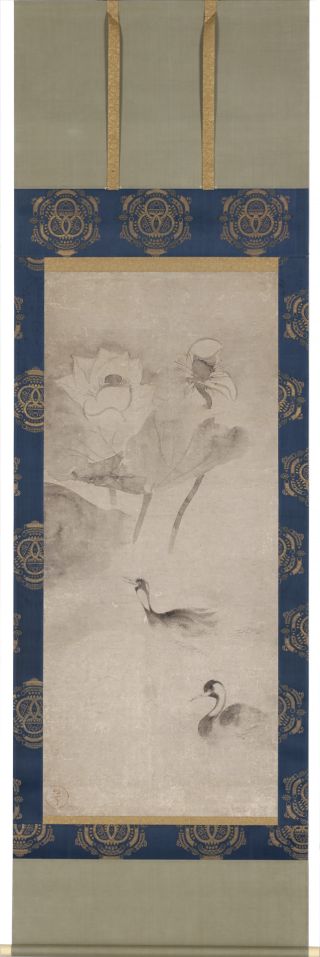
Discover Tawaraya Sōtatsu's masterpiece of Japanese ink painting, "Lotus Pond and Waterfowl" (Renchi Suikin-zu), held by the Kyoto National Museum. This National Treasure hanging scroll, painted in the early Edo period in ink alone, quietly sets two lotus stems and two little grebes in dialogue to evoke the passage of a summer. This guide introduces the painting's artistic value, the reasons for its designation, its highlights, and the surrounding sights of Kyoto's Higashiyama district.
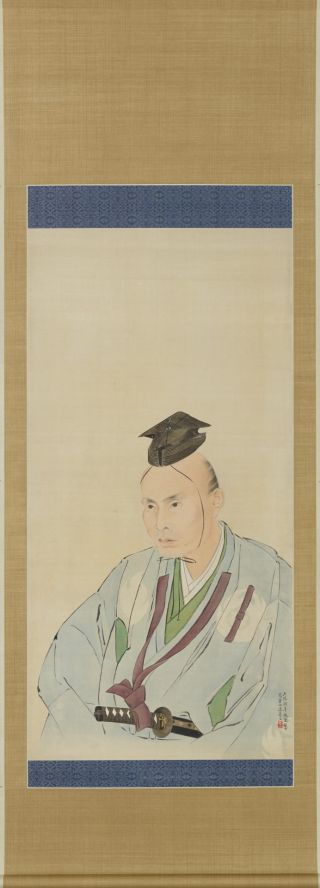
Watanabe Kazan's 1837 portrait of scholar Takami Senseki blends Western facial shading with East Asian brushwork. A National Treasure at the Tokyo National Museum.
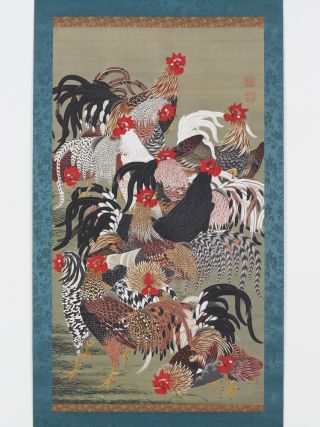
Ito Jakuchu's National Treasure: thirty silk scrolls of birds, fish, and flowers painted over a decade for a Kyoto Zen temple, held at Tokyo's Sannomaru Shozokan.

A collection of 2,435 Shingon ritual manuscripts handed down at Kajuji in Yamashina, Kyoto, spanning the 11th to 19th centuries and designated in 2020.
An Edo-period katana by the Kyoto smith Kunimichi, a leading pupil of Horikawa Kunihiro, held privately in Aichi, designated an Important Cultural Property in 1959.
Held in a private collection in Aichi Prefecture, this Important Cultural Property is a hexagonal plate made by the potter Ogata Kenzan with painting by his elder brother, the Rinpa master Ogata Korin. Dated 1710 on its base, it is the only known collaborative ceramic by the two brothers bearing a specific year, and its rare hexagonal form, Korin's crane and pine painting, and Kenzan's own poetic inscription make it a cornerstone reference work in the study of Rinpa ceramics.
A fourteenth-century Yuan painting of a palace lady with a flute in a private collection, a National Treasure since 1952.
Discover Kano Sansetsu's Snowy Shore with Waterfowl, an Important Cultural Property of Japan held on deposit at the Kyoto National Museum. This pair of six-panel folding screens by the second-generation head of the Kyo Kano school depicts a moonlit winter coast where silver-leaf waves and countless waterfowl create one of the most haunting visions of early Edo painting.
Discover the Cloud Dragon Ink Painting (Unryūzu) by Edo-period master Maruyama Ōkyo, an Important Cultural Property of Japan. Learn about its powerful sumi-ink technique and how to view it at the Kyoto National Museum.
Discover the Persian Manuscript in Japan, a remarkable 13th-century document brought from Song-dynasty Quanzhou by the monk Keisei. This Important Cultural Property contains Persian poetry and reveals the vibrant maritime Silk Road connections between medieval Japan, China, and Persia.
The Fukui Family Kyōmasu-za Related Materials, an Important Cultural Property of Kyoto Prefecture, comprise 2,139 items including documents, maps, actual reference measuring boxes, and a branding iron passed down in the Fukui family, who held the exclusive shogunate authority to manufacture, sell, and inspect official measures for the 33 provinces of western Japan. Designated in 1990, it is the sole surviving archive of a shogunate-authorized measuring guild, offering irreplaceable insight into Edo-period weights and measures administration.
An Important Cultural Property of Japan held privately in Kyoto Prefecture. This hanging scroll is a Zen ink-trace (bokuseki) brushed in 1268 by the Southern Song Chan master Wu'er Kexuan (also known as Shiqiao Kexuan), giving a verse-poem to his disciple Ming, who served as the temple's head of guests. As a precisely dated late-Southern-Song original, it is a primary document of Sino-Japanese Zen exchange and an exemplar of the calligraphy that came to be revered as the highest form of hanging scroll in the Japanese tea ceremony.
This Important Cultural Property is an ink calligraphy (bokuseki) by Lingshi Ruzhi, a Yuan-dynasty Chan monk and direct disciple of the celebrated master Xutang Zhiyu. Written in 1330 as a gatha for the monk Zhèngtáng, this work connects the spiritual lineage of Rinzai Zen with Japan's tea ceremony culture and is privately held in Kyoto Prefecture.
A late work by Yosa Buson in a private collection, a National Treasure since 2009, contrasting a dark night sky with snow-white houses and mountains.
A silk portrait of the ink master Sesshu by Unkoku Toeki, who claimed to be his fourth-generation heir, bearing a verse by a Daitoku-ji abbot. Designated in 2023.
This 16-meter handscroll at Hōfu's Mōri Museum is Unkoku Tōeki's copy of Sesshū's National Treasure landscape, designated an Important Cultural Property in 2023.
The Takasu Family Documents are a collection of 127 historical documents spanning from 1351 to 1643, along with a rare Ming dynasty trade ship flag. Designated as an Important Cultural Property, this archive reveals the activities of the Takasu clan as deputy governors of Akama-ga-seki (Shimonoseki) under the Mōri, managing international trade between Japan and Ming China.
An iron sword guard carved with shore pines and plovers by Tsuchiya Yasuchika, a leading master of Edo metalwork. Designated an Important Cultural Property in 1955.
Nine documents by Kawachiya Kashō, a wealthy farmer and brewer, and his heirs reveal how an educated villager in Edo Japan weighed family, learning, and survival.
Discover the 953-item Important Cultural Property collection documenting the achievements of Kunitomo Ikkansai (1778–1840), the 'Edison of the Edo Period.' From Japan's first reflecting telescope and sunspot observation records to the country's first practical air gun, explore the extraordinary scientific legacy born in a small gunsmith village in Shiga Prefecture.