
Edo
江戸Browse Japan’s cultural heritage from the Edo period (1603 – 1868). Filter by prefecture, type, and keyword, with concise stories, maps, and travel tips.
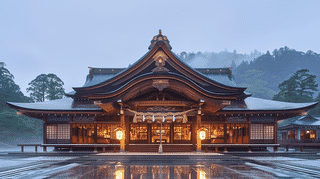
The main hall of Izumo Taisha in Shimane was built in 1744 in the taisha-zukuri form and is the largest surviving example. It became a National Treasure in 1952.
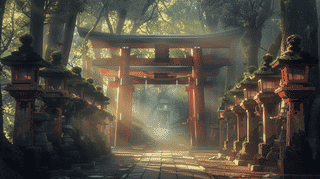
Kamo Mioya Shrine in Kyoto, known as Shimogamo, holds two National Treasure sanctuaries of 1863 and 31 Important Cultural Property buildings of 1629, listed as one.
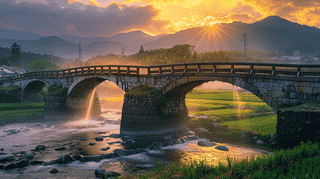
Tsujun Bridge in Kumamoto, a stone aqueduct of 1854, lifts water to a plateau above itself through stone-pipe siphons. Japan's first engineering National Treasure.
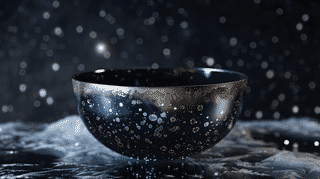
A Southern Song Jian bowl at the Museum of Oriental Ceramics in Osaka, silver spots packed tightly across both surfaces. Once owned by the regent Hidetsugu.

A Southern Song tenmoku bowl at the Fujita Museum in Osaka, its black glaze scattered with haloed spots. Alone among yohen bowls, it is mottled inside and out.
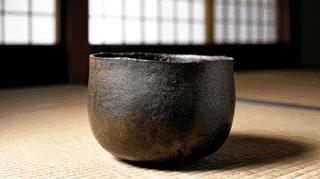
An Edo-period tea bowl by Hon'ami Koetsu in Nagoya, Aichi. Black glaze covers it but thins in places, letting the clay body show through. Designated in 2007.
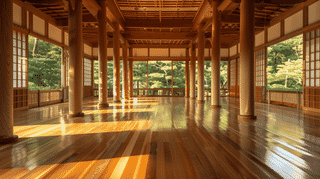
A local school begun in 1666 by Ikeda Mitsumasa in Bizen, Okayama. Its lecture hall of 1701, roofed in Bizen ware, became a National Treasure in 1953.
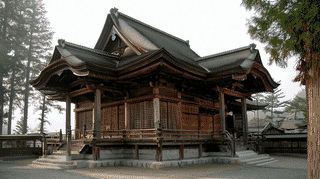
A shrine hall in Tsuyama, Okayama, entered from the gable end. The Agency dates it to 1657; the shrine records building in 1562 and repair in that year.
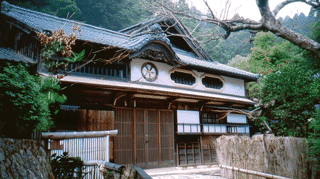
A single-storey timber house at the Okute post station in Mizunami, Gifu. A quatrefoil window sits in the low wall above its front eaves, with a crest beside it.
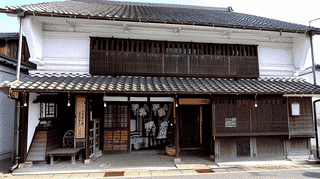
A former lodging house at the Ota post station on the Nakasendo in Minokamo, Gifu. Plastered to the eaves, it still leaves its head rails and brackets in view.
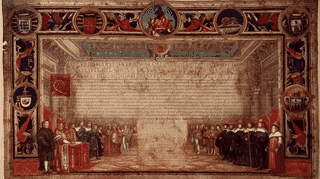
Forty-seven items at the Sendai City Museum, brought back from Europe by Hasekura Tsunenaga, envoy of the lord of the Sendai domain to Spain and to Rome.
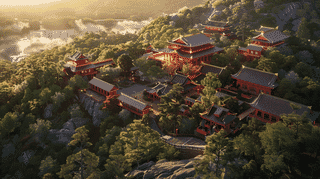
Experience the 1,160-year-old Iwashimizu Hachimangu Shrine, a National Treasure featuring rare Hachiman-zukuri architecture, imperial history, and surprising connections to Edison's light bulb. Just 30 minutes from Kyoto without the crowds.
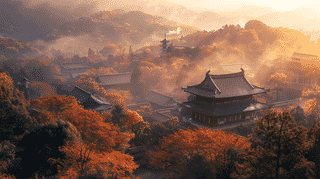
Discover Daitoku-ji Temple, Kyoto's 700-year-old Zen complex housing National Treasures and revolutionary gardens. Birthplace of Japanese tea ceremony and wabi-sabi aesthetics, this temple village offers authentic cultural immersion beyond typical tourism.
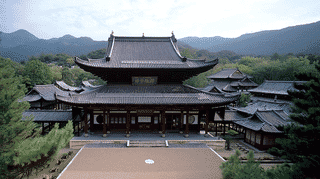
The head temple of the Obaku school at Uji, Kyoto. Its layout and its manner alike follow Chinese Buddhist building of the late Ming and the early Qing.
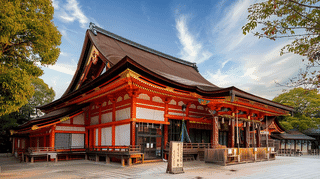
A shrine hall in Gion, Kyoto, seven bays by six, with three bays projecting at the back. Built in 1654, it was designated a National Treasure in 2020.
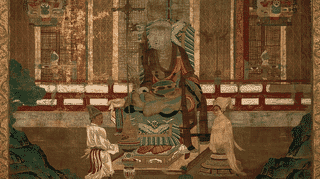
A Buddhist painting in sixteen scrolls owned by Seiryoji in Kyoto. The record gives its country as Song and its period as Northern Song, not as Japan.
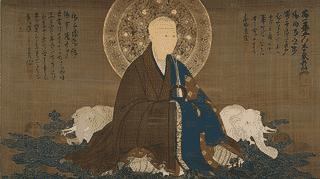
A Southern Song painting on one scroll at Tofukuji, Kyoto, showing the full figure. It came down in a single box with a second scroll of the same title.
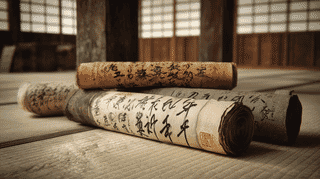
An autograph record at the Yomei Bunko in Kyoto Prefecture. The body of it copies out those very court documents that were designated alongside them all.
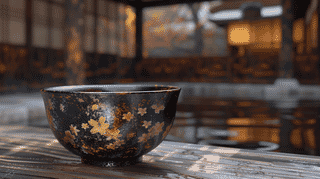
A Southern Song tea bowl held at Shokokuji in Kyoto Prefecture. On the inside, the pattern is formed exactly where the upper glaze was simply left off.
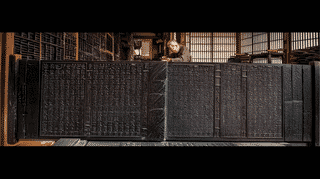
48,275 Edo-period printing blocks at Hozoin in Kyoto, counted to the single block. The scriptures printed from them are recorded apart from these ones.