
Edo
Tokyo · 江戸Browse Tokyo’s cultural heritage from the Edo period (1603 – 1868). Filter by type and keyword, with concise stories, maps, and travel tips.

A Southern Song tea bowl in Tokyo, known as the Inaba Tenmoku. Another bowl of the very same name here was listed on exactly the same day as this one.
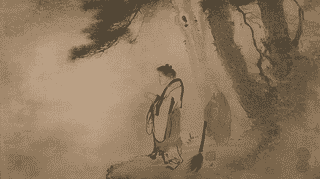
An ink painting on deposit at the Tokyo National Museum, owned by a foundation. Its title names Shide alone, and not the usual pair of the two figures.
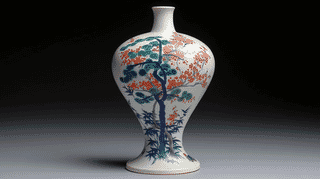
An Edo-period porcelain sake bottle held at Dazaifu in Fukuoka Prefecture, Japan. Its own matching fellow there, of the very same form, is still unlisted.

Taken in 1854 by Eliphalet Brown Jr. during Commodore Perry's expedition, this daguerreotype portrait of Tanaka Mitsuyoshi — a samurai official who negotiated with the American squadron — is one of the oldest surviving photographs of a Japanese person taken on Japanese soil. Designated a national Important Cultural Property in 2006, this quarter-plate daguerreotype is entrusted to the Tokyo Photographic Art Museum in Yebisu Garden Place, Meguro, Tokyo.
A collection of autograph manuscript drafts by the Edo-period Buddhist monk and scholar Keichū (1640–1701), designated as an Important Cultural Property of Japan. The collection includes working drafts of groundbreaking works such as the Man'yō Daishōki and Waji Shōran-shō that laid the foundations of Japanese classical studies and linguistics.
Held at the Tokyo National Museum, this Important Cultural Property is a rare dated hanging scroll painted in 1792 by literati master Uragami Gyokudō at age forty-eight, just two years before he abandoned his samurai life. Discover its bright indigo-and-ochre palette and the seeds of his later masterworks.
A Southern Song-period silk painting of a quail bearing the "Zakkashitsu-in" connoisseurship seal of Shogun Ashikaga Yoshinori, this Important Cultural Property descends from the celebrated Higashiyama lineage of Chinese paintings cherished by the Ashikaga shogunal house, and is privately preserved in Tokyo as a quiet witness to Japan's medieval engagement with classical Chinese art.
A 1641 portrait of tea master Sakuma Shogen by Kano Tanyu, made a year before his death, with inscriptions by Zen abbot Kogetsu Sogan and scholar Hayashi Razan.
Twelve silk leaves of insects and fish, paired with Chinese poems, painted by Watanabe Kazan in 1841 and sent to his pupil weeks before his death. A coded farewell.
Discover the Pigeon on a Peach Branch (Momohato-zu), a Japanese National Treasure attributed to Emperor Huizong of the Northern Song Dynasty. This exquisite silk painting from 1107 showcases the boneless (mokkotsu) technique, Slender Gold calligraphy, and a provenance tracing back to Shogun Ashikaga Yoshimitsu.
Held by the Diplomatic Archives of the Ministry of Foreign Affairs, Tsushin Zenran (320 volumes) and Zoku Tsushin Zenran (1,784 volumes) form Japan's first systematic compilation of diplomatic records. Covering the turbulent decade from 1859 to 1868, these approximately 2,000 volumes contain primary documents on Perry's arrival, the Namamugi Incident, and other pivotal Bakumatsu events. Designated an Important Cultural Property in 2016, related materials can be viewed free of charge at the Exhibition Room on the 5th floor of Mori JP Tower in Azabudai Hills, Tokyo.
Held in a private Tokyo collection, the Nanbu Family Documents are an Important Cultural Property of Japan comprising 243 unmounted medieval letters and orders preserved by the Hachinohe (later Tōno) Nanbu clan. Spanning the Kamakura through early Edo periods, the archive includes original directives from Southern Court generals Kitabatake Akiie and Akinobu, alongside the Soga Documents — making it a vital window into the wars and politics of medieval northern Japan.
Discover the Important Cultural Property tsuba by Tsuchiya Yasuchika, one of the celebrated Nara Sansaku masters. This Edo-period sword guard depicts plovers in flight against a golden sunrise through masterful iron carving and gold inlay.
Self-taught photographer Yokoyama Matsusaburo learned his craft to portray his mother. These 83 objects, kept by one Hakodate family, survive from early Meiji Japan.
Calligraphy by the Southern Song Chan master Xutang Zhiyu on wax-coated paper, an Important Cultural Property prized as a tea-room scroll, privately held in Tokyo.
A short sword whose tang records its maker's own age. Umetada Myoju forged it at sixty-one in 1618, late in a career that helped open the new-sword era.
A pair of gold-ground folding screens at the Tokyo National Museum: a Namban ship unloading cargo, and a procession winding toward a hilltop Christian church.
Discover the Seto Mimitsuki Mizusashi, a Registered Art Object held at Tokyo National Museum. This Edo-period (late 17th to 18th century) water jar, made at the historic Seto kiln, features a cylindrical body with charming bamboo-shaped handles, an iron glaze layered with poured ash glaze, and a black lacquered wooden lid. Explore its quiet beauty, historical significance, viewing highlights, and visitor information for the museum in Ueno Park, Tokyo.
Discover the Tekagami (292 Leaves), a registered work of art at Tokyo National Museum. Compiled in 1861 by Edo Shogunate official painter Sumiyoshi Hirotsura, this rare album contains 292 fragments of Japan's finest ancient calligraphy spanning a thousand years from Nara to Edo periods.
A pair of six-panel folding screens by Shōkadō Shōjō, one of the Three Great Calligraphers of the Kan'ei Era, featuring delicate four-seasons flower-and-bird paintings interwoven with sixteen scattered waka poems on a shimmering gold-and-silver ground.