
Heian
Kyoto · 平安Browse Kyoto’s cultural heritage from the Heian period (794 – 1185). Filter by type and keyword, with concise stories, maps, and travel tips.
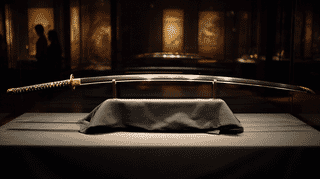
Discover the National Treasure Tachi signed Masatsune, a Heian-period Japanese sword by the legendary Ko-Bizen school. Housed at the Tokyo National Museum, this blade exemplifies the pinnacle of early Japanese sword craftsmanship.
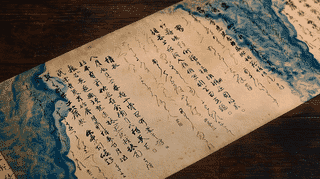
Discover the Wakan Rōeishū (Cloud Paper), a National Treasure of Japan housed at the Museum of the Imperial Collections. This 11th-century calligraphic masterpiece on indigo cloud-patterned paper beautifully unites Chinese poetry and Japanese waka.
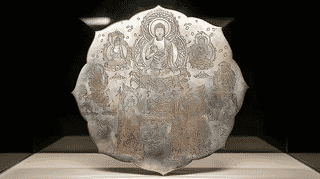
Discover the Line-Engraved Mirror with Shaka Triad (Senkoku Shaka Sanzon-tō Kyōzō), a Heian-period National Treasure featuring nine Buddhist deities in exquisite line engraving. Housed at the Sen-oku Hakukokan Museum in Kyoto.

Discover the 9th-century National Treasure silk paintings of the Twelve Devas from Saidai-ji Temple, the oldest surviving examples of these Buddhist guardian deity images in Japan, now preserved at the Tokyo National Museum.

Discover the Amabe Clan Genealogy, a National Treasure housed at Kono Shrine near Amanohashidate, Kyoto. This 9th-century scroll is Japan's oldest surviving family genealogy, revealing the history of an ancient seafaring clan.
Discover the National Treasure gilt-bronze sutra container (kyōzutsu) of Fujiwara no Michinaga, the oldest sutra burial artifact in Japan, dating from 1007. On deposit at the Kyoto National Museum, this Heian-period masterpiece reveals the faith and power of Japan's most influential regent.
Discover the Persian Manuscript in Japan, a remarkable 13th-century document brought from Song-dynasty Quanzhou by the monk Keisei. This Important Cultural Property contains Persian poetry and reveals the vibrant maritime Silk Road connections between medieval Japan, China, and Persia.
The Suhama-u Raden Suzuribako is a Heian-period writing box designated as an Important Cultural Property of Japan. Adorned with mother-of-pearl inlay depicting cormorants on a sandbar motif, this exquisite lacquerwork masterpiece showcases the extraordinary craftsmanship and refined aesthetic of Heian-era artisans. Discover the beauty of this rare treasure held in a private collection in Kyoto Prefecture, and explore the world of classical Japanese lacquer arts.
Held privately in Kyoto, this Important Cultural Property is a stone Buddhist relief dated to Kaiyuan 12 (724 CE). One of the famed Baoqing Temple group that once adorned Empress Wu Zetian's Seven-Treasure Platform in Tang Chang'an, it represents the High Tang synthesis of Indian Gupta and Chinese sculptural traditions.
Discover the National Treasure sutra boxes and artifacts from the Kinpusen Sutra Mounds at the Kyoto National Museum, testifying to the deep faith and artistic mastery of Heian-period aristocrats led by Fujiwara no Michinaga.
Privately owned in Kyoto Prefecture, the Bunpitsu Ganshinshō is a one-volume treatise on Chinese poetics compiled in 820 by the great Heian monk Kūkai (Kōbō Daishi) as his own abridgment of his larger six-volume Bunkyō Hifuron. As one of Japan's earliest works of literary theory and a window onto Kūkai's identity as a literary scholar, it is designated a national Important Cultural Property in the calligraphy and classical books category.
An Important Cultural Property of Japan held privately in Kyoto Prefecture. This hanging scroll is a Zen ink-trace (bokuseki) brushed in 1268 by the Southern Song Chan master Wu'er Kexuan (also known as Shiqiao Kexuan), giving a verse-poem to his disciple Ming, who served as the temple's head of guests. As a precisely dated late-Southern-Song original, it is a primary document of Sino-Japanese Zen exchange and an exemplar of the calligraphy that came to be revered as the highest form of hanging scroll in the Japanese tea ceremony.
Discover the Wooden Standing Eleven-Faced Kannon, a designated cultural property in Kyoto Prefecture. Explore the bodhisattva's symbolism, the artistry of Japanese wood-carved Buddhist sculpture, and Kyoto's deep tradition of Kannon worship, with guidance on related temples and museums.
Designated an Important Cultural Property in 1943, this Heian fragment of the annotated Wen Xuan preserves Chinese commentaries that survive nowhere else.
Preserved at the Kyoto National Museum, this manuscript carries the Benmeiron, or 'Discourse on Discriminating Fate,' from volume fifty-four of the Wen Xuan—the oldest surviving anthology of Chinese literature, compiled by Crown Prince Xiao Tong of the Liang dynasty. Reaching Japan by the Nara period and treasured by Heian-era aristocrats, manuscripts of the Wen Xuan reveal the deep cultural ties between Japan and continental East Asia. A meaningful destination for travelers drawn to classical Chinese thought, calligraphic beauty, and the literary world that shaped Japan's classical age.
A fragment of the Ruijū Utaawase, a twelfth-century compilation of Heian poetry contests, recording gatherings held on the Kōshin-vigil nights of 1067 and 1068.
Ring-dating in 2004 put the timber of Ujigami Shrine's main hall at about 1060, making it Japan's oldest surviving shrine hall. Three sanctuaries, one shared roof.
Behind Tō-ji's lecture hall sits a windowless azekura log storehouse. Dismantling revealed late-Heian timbers, making it the temple's oldest surviving building.
Discover the National Treasure three-storied pagoda of Jōruri-ji Temple in Kizugawa, Kyoto. Relocated from Kyoto in 1178, this Heian-period pagoda houses a sacred Yakushi Nyorai statue and stands as part of a rare Pure Land garden paradise.
Discover Joruri-ji Temple in Kizugawa, Kyoto — a National Treasure housing the only surviving set of nine Amida Buddha statues from the Heian period. Explore its Pure Land garden, three-storied pagoda, and the tranquil Tono stone Buddha trail.