
Meiji
Kyoto · 明治Browse Kyoto’s cultural heritage from the Meiji period (1868 – 1912). Filter by type and keyword, with concise stories, maps, and travel tips.
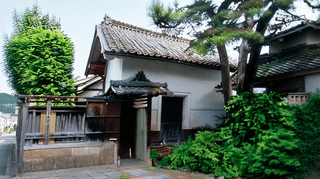
Discover the Imabayashi Family Residence Miso Storehouse, a Registered Tangible Cultural Property in Miyazu, Kyoto. This Meiji-period earthen storehouse reveals the prosperity of silk merchants along the historic Tango Chirimen Corridor. Explore traditional Japanese architecture near Amanohashidate, one of Japan's Three Scenic Views.
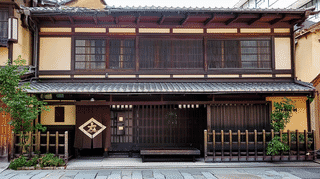
Discover Yoshida Family Residence (Mumeisha), a registered tangible cultural property in Kyoto. Experience authentic Meiji-era merchant house architecture, traditional gardens, and the famous Byobu Matsuri during Gion Festival's Atomatsuri procession.
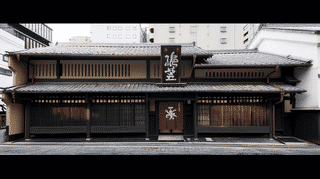
Discover Shimadai, a registered tangible cultural property in Karasuma-Oike, Kyoto. Explore this remarkably preserved 1883 merchant complex that once flourished in silk and sake trade, offering insights into Kyoto's commercial heritage away from crowded tourist spots.
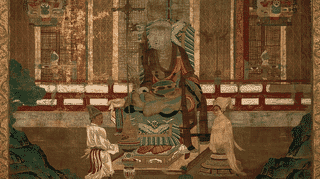
Discover the National Treasure "Sixteen Arhats" paintings at Seiryoji Temple in Kyoto. These rare Northern Song Chinese Buddhist paintings are the only surviving Chinese examples in Japan and among the oldest arhat paintings in the world.
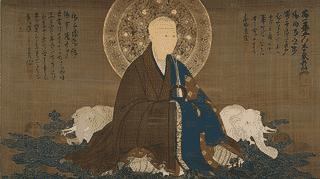
Discover the National Treasure "Portrait of Wuzhun Shifan" at Tofuku-ji Temple in Kyoto. A masterpiece of Southern Song Dynasty chinso portraiture from 1238 that embodies the spiritual bond between Zen master and disciple across China and Japan.
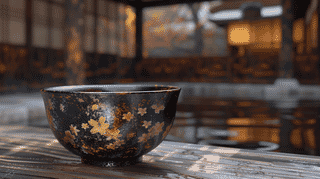
Discover the Taihi Tenmoku tea bowl, a National Treasure from 12th-13th century China housed at Shokoku-ji Temple in Kyoto. Learn about its unique tortoiseshell glaze pattern, historical significance in Japanese tea ceremony, and how to visit this masterpiece of Song Dynasty ceramics.
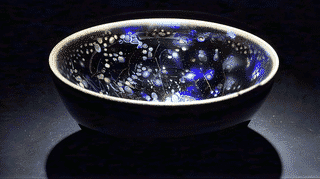
Discover the mystical Yohen Tenmoku tea bowl at Rikkoin Temple, one of only three surviving examples in the world. Learn about this 800-year-old treasure's cosmic patterns, its connection to tea ceremony culture, and viewing opportunities in Kyoto.

Discover the Persian Manuscript in Japan, a remarkable 13th-century document brought from Song-dynasty Quanzhou by the monk Keisei. This Important Cultural Property contains Persian poetry and reveals the vibrant maritime Silk Road connections between medieval Japan, China, and Persia.
An Important Cultural Property of Japan held privately in Kyoto Prefecture. This hanging scroll is a Zen ink-trace (bokuseki) brushed in 1268 by the Southern Song Chan master Wu'er Kexuan (also known as Shiqiao Kexuan), giving a verse-poem to his disciple Ming, who served as the temple's head of guests. As a precisely dated late-Southern-Song original, it is a primary document of Sino-Japanese Zen exchange and an exemplar of the calligraphy that came to be revered as the highest form of hanging scroll in the Japanese tea ceremony.
Discover the Hongwanji Dendoin, an Important Cultural Property in Kyoto designed by legendary architect Ito Chuta in 1912. This red-brick treasure near Nishi Hongwanji blends Islamic domes, British brickwork, and Japanese design into one extraordinary building.
Standing on the windswept northernmost cliff of the Tango Peninsula in Kyoto Prefecture, Kyōgamisaki Lighthouse is a working Meiji-era stone tower first lit on December 25, 1898. It is one of only five "first-order" lighthouses in Japan, and its original French-made Fresnel lens and pioneering mercury-bath rotation mechanism are still in operation today. Designated an Important Cultural Property in 2022, it stands amid the columnar basalt cliffs of the San'in Kaigan UNESCO Global Geopark and offers visitors one of the most dramatic coastal landscapes in western Japan.
The Holy Annunciation Cathedral of Kyoto Orthodox Church, located in Nakagyo Ward, Kyoto, is Japan's oldest surviving full-scale wooden Orthodox cathedral, completed in 1903. Designed by Shigemitsu Matsumuro based on Russian Holy Synod approved plans, this Russian-Byzantine style building houses a magnificent iconostasis with 30 sacred icons crafted in Moscow during the late Russian Imperial period. Designated as a national Important Cultural Property in 2022.
Built in 1904 near the Kyoto Imperial Palace, this brick Renaissance hall still holds government offices, reputedly Japan's oldest such building in active use.
Near Kyoto's Nanzen-ji, this Meiji villa pairs a famed Ueji garden, fed by the Lake Biwa Canal, with a sukiya house named an Important Cultural Property in 2024.
Completed in 1906 and designed by renowned architects Tatsuno Kingo and Nagano Uheiji, the Former Bank of Japan Kyoto Branch is a stunning example of Meiji-era Western-style architecture. Designated a national Important Cultural Property, this iconic red-brick building now serves as the Museum of Kyoto Annex, open free to the public. Visitors can admire the grand double-height banking hall, historic vault room café, and the signature 'Tatsuno style' design that predates Tokyo Station.
The Former Butokuden in Kyoto's Okazaki district is Japan's oldest surviving martial arts hall, built in 1899 by the Dai Nippon Butokukai. Designed by architect Matsumuro Shigemitsu, this masterpiece of modern Japanese-style architecture was designated a nationally Important Cultural Property in 1996. Still actively used as part of the Kyoto Budo Center, it hosts the annual All Japan Kendo Demonstration Tournament each May.
A French priest's 1896 design, built by Miyazu carpenters: a wooden church with a Romanesque vault over a tatami floor. An Important Cultural Property since 2024.
A stone myojin torii marking the approach to Amino Shrine, raised in 1881 and 5.5 metres tall. Toppled in the 1927 quake, it was rebuilt to its original form in 1929.
Standing before Imamiya Shrine's Honden, the 1902 Heiden, worship area and corridors shape the space worshippers face, with a cusped gable and cloud carving.
The Honden of Imamiya Shrine in Kyoto's Murasakino was rebuilt in 1902 after a fire, standing beside the older Ekijinja hall, now a Registered Cultural Property.