
Meiji
Kyoto · 明治Browse Kyoto’s cultural heritage from the Meiji period (1868 – 1912). Filter by type and keyword, with concise stories, maps, and travel tips.
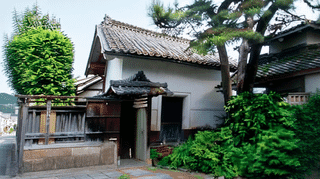
The smallest of seven registered Imabayashi buildings in Miyazu, a Meiji store with white plaster, a boarded base and fan-set rafters like 3 others. Registered 2002.
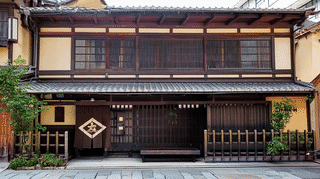
A Meiji townhouse on Shinmachi-dori in Kyoto, 180 square metres. Its ground-floor front divides in three: a doorway, a display board and a lattice bay.
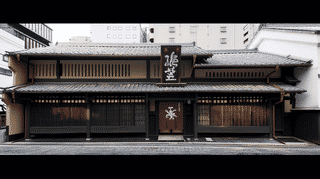
A shop of 1883 on Oike-dori in Kyoto, 80 square metres. Its plan wraps in an L around a storehouse that is itself registered quite separately from it.
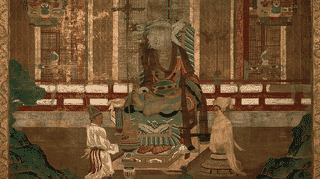
A Buddhist painting in sixteen scrolls owned by Seiryoji in Kyoto. The record gives its country as Song and its period as Northern Song, not as Japan.
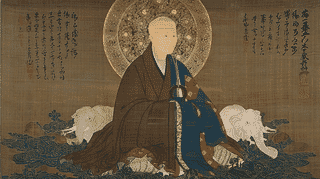
A Southern Song painting on one scroll at Tofukuji, Kyoto, showing the full figure. It came down in a single box with a second scroll of the same title.
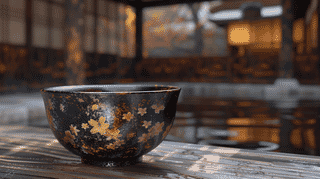
A Southern Song tea bowl held at Shokokuji in Kyoto Prefecture. On the inside, the pattern is formed exactly where the upper glaze was simply left off.
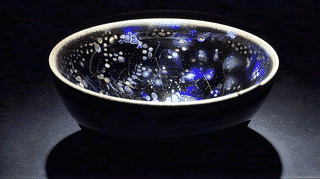
A tea bowl held at Ryukoin in Kyoto Prefecture. Yet another bowl of the very same name is recorded there under a different system of listing altogether.

Discover the Persian Manuscript in Japan, a remarkable 13th-century document brought from Song-dynasty Quanzhou by the monk Keisei. This Important Cultural Property contains Persian poetry and reveals the vibrant maritime Silk Road connections between medieval Japan, China, and Persia.
An Important Cultural Property of Japan held privately in Kyoto Prefecture. This hanging scroll is a Zen ink-trace (bokuseki) brushed in 1268 by the Southern Song Chan master Wu'er Kexuan (also known as Shiqiao Kexuan), giving a verse-poem to his disciple Ming, who served as the temple's head of guests. As a precisely dated late-Southern-Song original, it is a primary document of Sino-Japanese Zen exchange and an exemplar of the calligraphy that came to be revered as the highest form of hanging scroll in the Japanese tea ceremony.
Ito Chuta's 1911 insurance office by Nishi Honganji, Kyoto, now the Hongwanji Dendoin: English brick with an Indian dome, hexagonal tower and Chinese balustrades.
Kyogamisaki Lighthouse in Kyotango, Kyoto, built in 1898 with a first-order lens, was the first to float its lens on mercury and is designated with a storehouse.
The Kyoto Orthodox Cathedral of the Annunciation, a timber church of 1903 with a cupola, a belfry and a Russian iconostasis, is the oldest of its kind in Japan.
Built in 1904 near the Kyoto Imperial Palace, this brick Renaissance hall still holds government offices, reputedly Japan's oldest such building in active use.
Near Kyoto's Nanzen-ji, this Meiji villa pairs a famed Ueji garden, fed by the Lake Biwa Canal, with a sukiya house named an Important Cultural Property in 2024.
Four brick structures of 1895 at the Kyoto National Museum, designed by Katayama Tokuma and listed in 1969. The main hall is closed, but the gate and walls remain.
The former Bank of Japan Kyoto Branch on Sanjo-dori, a brick building of 1906 by Tatsuno Kingo and Nagano Uheiji, is now the annex of the Museum of Kyoto.
The Former Butokuden in Kyoto, a vast timber martial arts hall of 1899 that the city calls the oldest in Japan, is still used as part of the Kyoto City Budo Center.
A French priest's 1896 design, built by Miyazu carpenters: a wooden church with a Romanesque vault over a tatami floor. An Important Cultural Property since 2024.
A stone myojin torii marking the approach to Amino Shrine, raised in 1881 and 5.5 metres tall. Toppled in the 1927 quake, it was rebuilt to its original form in 1929.
The gate of Anrakuji in Shishigatani, Kyoto, built in 1892 at the top of stone steps, is a thatched sukiya-style gate with octagonal posts and fanned log rafters.