
Asuka
飛鳥Browse Japan’s cultural heritage from the Asuka period (538 – 710). Filter by prefecture, type, and keyword, with concise stories, maps, and travel tips.
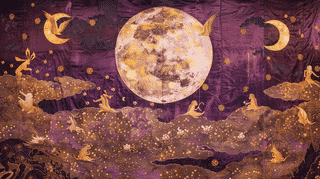
An Asuka-period embroidery owned by Chuguji in Nara Prefecture. Asuka work and a Kamakura copy of it sit together within one and the very same frame now.

Discover the Persian Manuscript in Japan, a remarkable 13th-century document brought from Song-dynasty Quanzhou by the monk Keisei. This Important Cultural Property contains Persian poetry and reveals the vibrant maritime Silk Road connections between medieval Japan, China, and Persia.
Held privately in Kyoto, this Important Cultural Property is a stone Buddhist relief dated to Kaiyuan 12 (724 CE). One of the famed Baoqing Temple group that once adorned Empress Wu Zetian's Seven-Treasure Platform in Tang Chang'an, it represents the High Tang synthesis of Indian Gupta and Chinese sculptural traditions.
An Important Cultural Property of Japan held privately in Kyoto Prefecture. This hanging scroll is a Zen ink-trace (bokuseki) brushed in 1268 by the Southern Song Chan master Wu'er Kexuan (also known as Shiqiao Kexuan), giving a verse-poem to his disciple Ming, who served as the temple's head of guests. As a precisely dated late-Southern-Song original, it is a primary document of Sino-Japanese Zen exchange and an exemplar of the calligraphy that came to be revered as the highest form of hanging scroll in the Japanese tea ceremony.
Preserved at the Kyoto National Museum, this manuscript carries the Benmeiron, or 'Discourse on Discriminating Fate,' from volume fifty-four of the Wen Xuan—the oldest surviving anthology of Chinese literature, compiled by Crown Prince Xiao Tong of the Liang dynasty. Reaching Japan by the Nara period and treasured by Heian-era aristocrats, manuscripts of the Wen Xuan reveal the deep cultural ties between Japan and continental East Asia. A meaningful destination for travelers drawn to classical Chinese thought, calligraphic beauty, and the literary world that shaped Japan's classical age.
A Southern Song-period silk painting of a quail bearing the "Zakkashitsu-in" connoisseurship seal of Shogun Ashikaga Yoshinori, this Important Cultural Property descends from the celebrated Higashiyama lineage of Chinese paintings cherished by the Ashikaga shogunal house, and is privately preserved in Tokyo as a quiet witness to Japan's medieval engagement with classical Chinese art.
Discover the Pigeon on a Peach Branch (Momohato-zu), a Japanese National Treasure attributed to Emperor Huizong of the Northern Song Dynasty. This exquisite silk painting from 1107 showcases the boneless (mokkotsu) technique, Slender Gold calligraphy, and a provenance tracing back to Shogun Ashikaga Yoshimitsu.
Calligraphy by the Southern Song Chan master Xutang Zhiyu on wax-coated paper, an Important Cultural Property prized as a tea-room scroll, privately held in Tokyo.
This Tang dynasty manuscript (7th–8th century) is the oldest surviving copy of Volume 6 of the Shishuo Xinshu (Shishuo Xinyu), a celebrated Chinese anecdote collection. Designated as a National Treasure, this fragment features elegant Tang calligraphy, Heian-period reading marks, and esoteric Buddhist texts on the verso — a testament to over a millennium of Sino-Japanese cultural exchange.
A Tang manuscript of a poetry collection in the Osu library of Hoshoin, Nagoya, a National Treasure.
Held in the Hosa Library in Nagoya, the Song Edition of the Taiping Shenghui Fang (Kanazawa Bunko Version) is a Southern Song printed copy of the imperial medical encyclopedia originally compiled in 100 volumes by Wang Huaiyin under the command of Emperor Taizong. Designated an Important Cultural Property, it traveled from Hōjō Sanetoki's Kanazawa Bunko through Toyotomi Hidetsugu and Tokugawa Ieyasu to the first Owari lord Tokugawa Yoshinao. The 24 surviving printed booklets, supplemented by 27 Keichō-era manuscript volumes, bear the distinctive 'Kanazawa Bunko' and 'Gohon' seals on every volume, making it a primary witness to East Asian medical history.
The Uji Bridge Stele Fragment at Hojoin, Uji, records the building of the Uji Bridge in 646 by the monk Doto. An Important Cultural Property since 1965.
A Tang-dynasty stole of Toji, Kyoto, said to have come to Kukai from his teacher Huiguo, a National Treasure since 1953.
Discover the National Treasure bokuseki calligraphy by Chinese Chan master Xutang Zhiyu, preserved at Daitoku-ji temple in Kyoto. Learn about its Zen heritage, tea ceremony significance, and how to view this masterpiece.
A Tang manuscript of the Chinese dictionary Yupian at Kozanji, Kyoto, a National Treasure since 1952, lost in China and completed by the second half at Ishiyamadera.
A Tang seven-panel kesa of Toji, Kyoto, said to have come to Kukai from Huiguo, a National Treasure since 1953, woven with layered clouds in tsuzure-ori.
A National Treasure of Shōjōke-in, Kyoto: a Southern Song Amida triad in three signed scrolls by the Ningbo painter Fuetsu, now held at the Kyoto National Museum.
Ninna-ji's National Treasure Kujaku Myōō, a Song-dynasty Chinese painting, shows the Peacock Wisdom King with three faces and six arms on a white peacock.
Two Southern Song scrolls at Kyoto's Konchi-in, the Autumn and Winter Landscapes are a National Treasure once owned by the Ashikaga shoguns and ascribed to Huizong.
Two Southern Song ink landscapes attributed to Li Tang at Kotoin, Daitokuji, Kyoto, a National Treasure since 1952; the temple is closed in 2026.