
Registered Tangible Cultural Properties of Japan
登 録 有 形 文 化 財Browse Japan’s Registered Tangible Cultural Properties nationwide. Filter by prefecture, period, and category, with concise stories, maps, and practical travel tips.

A single-storey Meiji house on the south side of the Abuden Miso plot in Tochigi, built as a retirement residence for the third Denbei. Listed in 2004.
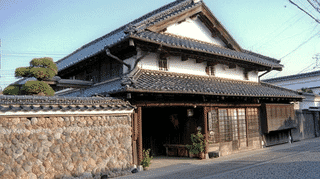
A Meiji storehouse on the north side of the Abuden Miso plot in Tochigi, its lean-to wall running on into a tuff boundary wall. Listed as heritage in 2004.
An 1885 storehouse on the north side of the Abuden Miso plot in Tochigi, three floors inside and two from without, built by the local master Mitomi Seibei.
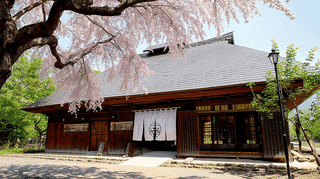
An Edo-period main house in Shimotsuke, Tochigi Prefecture, Japan. Given to the city over there, it was then moved right to a park even so even today.
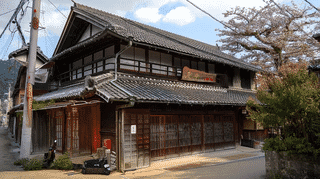
The Tamaya main house, a late Edo inn before the gate of Taimadera in Katsuragi, Nara, has a festive air with lattices, a pine-and-crane relief and carved jewels.
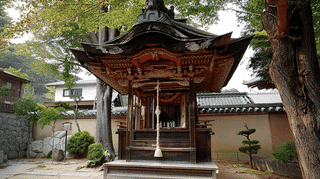
The guardian shrine of Nakanobo at Taimadera, Katsuragi, Nara Prefecture, Japan. Just 1.4 square metres, it has two kinds of gable and colour over the whole.
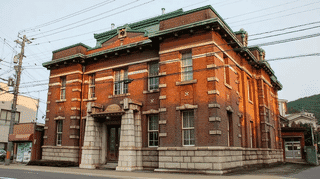
A Taisho-period office at a river mouth in Imizu, Toyama Prefecture, Japan. Built for a shipping firm and now a head office, it lays brown brick over timber.
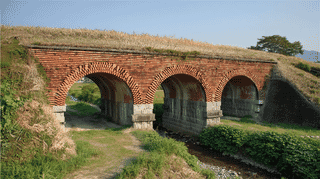
A Meiji-period brick railway bridge of three arches at Aka, Fukuoka Prefecture, Japan. Its downstream brickwork, toothed for a second track, has become ornament.
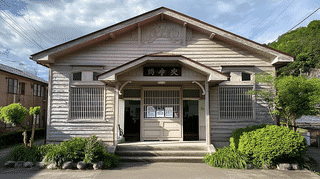
A Showa-period former bathhouse in Fukuoka, Japan. Western in its own outward form over there, and yet plainly a bathhouse within it even so now today.
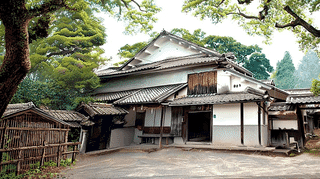
A Meiji-period main house in Ukiha, Fukuoka Prefecture, Japan. Its own roof over there takes one form east and quite another form west even so even now.
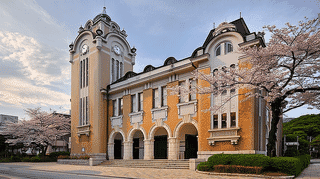
A public hall of 1924 at Fumotoyama in Koriyama, Fukushima, built to mark the city charter, with an arched colonnade and a corner tower. Listed in 2002.
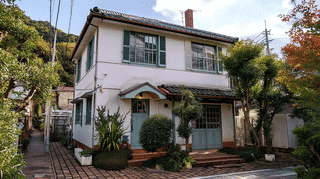
A Western-style house among the old foreign residences of Kitano, Kobe, Japan. Its living and dining rooms run as three with a fireplace, a fine early Showa example.
The 1904 main house of the Iwasa Residence at Toba in Akashi, Hyogo, plastered black with lean-tos on three sides. Listed as a heritage building in 2007.
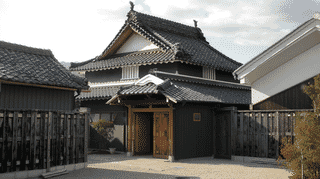
The 1904 storehouse of the Iwasa Residence at Toba in Akashi, Hyogo, two bays square in white plaster under formal tiles. Listed as a heritage building in 2007.
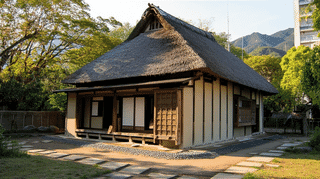
An early Showa two-story storehouse between the main house and rear annex of the Oishi home in Tanto, Toyooka, linked to both by covered passages. Registered 2011.
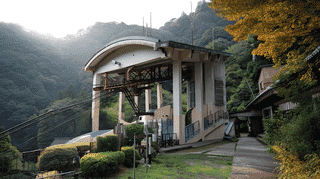
A Showa-period station building in Toyooka, Hyogo Prefecture, Japan. Its own upper floor over there carries two quite separate platforms even so today.
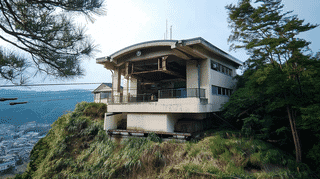
A Showa-period station building in Toyooka, Hyogo Prefecture, Japan. Only the west of its own roof over there lies quite flat, under a deck even today.
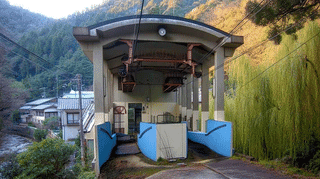
A Showa-period station building in Toyooka, Hyogo Prefecture, Japan. It combines its own steel framing over there with reinforced concrete even today.
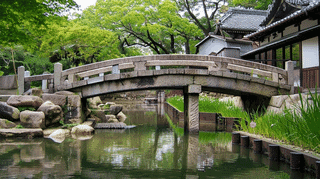
An Edo-period stone girder bridge in Nishinomiya, Hyogo Prefecture, Japan. It only runs just 6.0 metres from the one end of it to the other side of it.
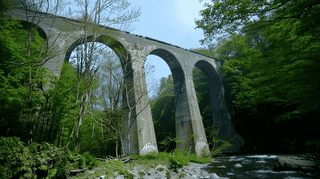
A railway bridge of ten concrete arches at Shari, Hokkaido, Japan. Finished in 1940 as work on the line stopped, it never carried a train; two piers were removed.
More across Japan
The complete kokuhō catalogue — browse by prefecture, period, and category.
Nationwide jūyō bunkazai — architecture, sculpture, painting, crafts, and documents.
UNESCO-inscribed cultural and natural sites across the archipelago.