
Muromachi
Kyoto · 室町Browse Kyoto’s cultural heritage from the Muromachi period (1336 – 1573). Filter by type and keyword, with concise stories, maps, and travel tips.
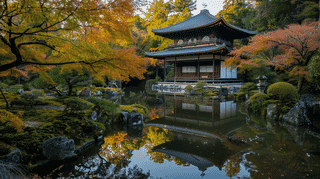
Discover Ginkaku-ji (Silver Pavilion), a UNESCO World Heritage site embodying Japan's wabi-sabi philosophy. Experience the perfect harmony of 15th-century architecture, innovative sand gardens, and seasonal beauty along Kyoto's Philosopher's Path.
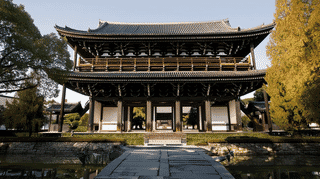
Discover the Tofukuji Sanmon Gate, a National Treasure of Japan and the oldest surviving Zen temple gate. Learn about its Daibutsu-style architecture, Muromachi-era ceiling paintings, and sacred Buddha statues in Kyoto's Higashiyama district.
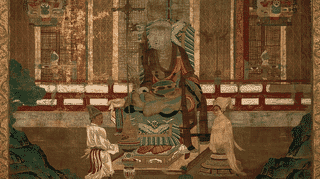
Discover the National Treasure "Sixteen Arhats" paintings at Seiryoji Temple in Kyoto. These rare Northern Song Chinese Buddhist paintings are the only surviving Chinese examples in Japan and among the oldest arhat paintings in the world.
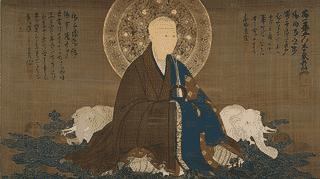
Discover the National Treasure "Portrait of Wuzhun Shifan" at Tofuku-ji Temple in Kyoto. A masterpiece of Southern Song Dynasty chinso portraiture from 1238 that embodies the spiritual bond between Zen master and disciple across China and Japan.
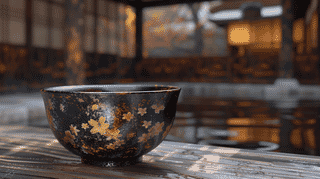
Discover the Taihi Tenmoku tea bowl, a National Treasure from 12th-13th century China housed at Shokoku-ji Temple in Kyoto. Learn about its unique tortoiseshell glaze pattern, historical significance in Japanese tea ceremony, and how to visit this masterpiece of Song Dynasty ceramics.
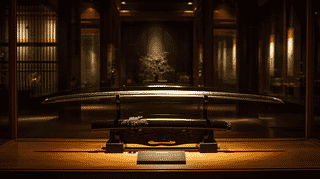
Discover the Important Cultural Property tachi sword crafted by Moromitsu in 1402, one of the "Three Masters" of Oei Bizen. Explore the history, artistry, and cultural significance of this exceptional blade housed at Kyoto's Kitano Tenmangu Shrine.
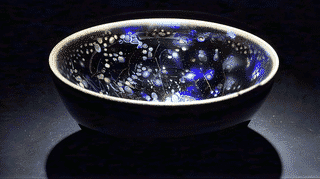
Discover the mystical Yohen Tenmoku tea bowl at Rikkoin Temple, one of only three surviving examples in the world. Learn about this 800-year-old treasure's cosmic patterns, its connection to tea ceremony culture, and viewing opportunities in Kyoto.

Discover the Persian Manuscript in Japan, a remarkable 13th-century document brought from Song-dynasty Quanzhou by the monk Keisei. This Important Cultural Property contains Persian poetry and reveals the vibrant maritime Silk Road connections between medieval Japan, China, and Persia.
Housed at the Kyoto National Museum, the Hanada-ito Odoshi Dōmaru is an Important Cultural Property of Muromachi-era armor laced with pale indigo cords and complete with its helmet and large shoulder guards. Its akoda-shaped helmet, intricate shakudō chrysanthemum fittings, and connection to the Nasu family — famed for the legendary archer Nasu no Yoichi — make it a rare window into medieval Japanese martial and craft heritage.
An Important Cultural Property of Japan held privately in Kyoto Prefecture. This hanging scroll is a Zen ink-trace (bokuseki) brushed in 1268 by the Southern Song Chan master Wu'er Kexuan (also known as Shiqiao Kexuan), giving a verse-poem to his disciple Ming, who served as the temple's head of guests. As a precisely dated late-Southern-Song original, it is a primary document of Sino-Japanese Zen exchange and an exemplar of the calligraphy that came to be revered as the highest form of hanging scroll in the Japanese tea ceremony.
This Important Cultural Property is an ink calligraphy (bokuseki) by Lingshi Ruzhi, a Yuan-dynasty Chan monk and direct disciple of the celebrated master Xutang Zhiyu. Written in 1330 as a gatha for the monk Zhèngtáng, this work connects the spiritual lineage of Rinzai Zen with Japan's tea ceremony culture and is privately held in Kyoto Prefecture.
Izumo Daijingu in Kameoka, Kyoto Prefecture, is an ancient shrine known as 'Moto-Izumo' (Original Izumo) and ranked as the premier shrine of Tanba Province. Its main hall, believed to have been renovated by Ashikaga Takauji in 1345, is a masterpiece of medieval shrine architecture in the sangensha-nagare-zukuri style with cypress bark roofing, designated as an Important Cultural Property of Japan. Dedicated to Ōkuninushi, the deity of matchmaking, the shrine also features sacred spring water, ancient rock formations, and the revered Mount Mikage.
The Main Hall of Itsuki Shrine in Ayabe, Kyoto Prefecture, is a single-bay nagare-zukuri board-roofed shrine dating to the mid-Muromachi period. Designated a nationally Important Cultural Property in August 2024, it is celebrated for its rare blend of Shinto and Zen Buddhist architectural elements and its legendary ties to Prince Maroko's demon-slaying campaign.
Standing in the Kakushoin Cemetery behind Seiryoji Temple in Kyoto's Sagano district, this early Muromachi-period granite hokyoin-to (treasure-print pagoda) features a rare carving technique with circular niches housing half-relief seated Buddhas on each of its four faces. Designated as an Important Cultural Property of Japan in 1960, it represents a masterpiece of medieval stone craftsmanship.
Gansen-ji's vermilion three-storied pagoda in Kizugawa, Kyoto, dates to 1442. This Important Cultural Property is loved for the carved goblins shouldering its eaves.
This square, thatched, hipped Kannon hall at Shimo-Awano in Kyōtamba was raised before 1539. Ridge tablets fix its date; it is an Important Cultural Property.
At To-ji's northwest corner, the Mieido is a National Treasure that began as Kukai's residence. Rebuilt in 1380, it holds a daily 6 a.m. rite and is free to enter.
Myōshin-ji's oldest subtemple holds the Kaisandō, or Mishōan, a mid-Muromachi Zen-style hall moved from Tōfuku-ji in 1537 to honor its founder, Kanzan Egen.
At Gyokuhōin, Myōshin-ji's oldest sub-temple, a cypress-bark gate fronts the founder's hall. Tradition dates it to 1409, among Japan's oldest surviving karamon.
Discover Sagara Shrine Main Hall (Saganaka Jinja Honden), an Important Cultural Property from the early Muromachi period in Kizugawa City, Kyoto. Explore its exquisite Nagare-zukuri architecture, ancient rituals, and timeless beauty.