
National Treasures of Tokyo
東 京 都 の 国 宝Tokyo’s national treasures — properties designated kokuhō for their exceptional value to the nation.

Five Asuka-period murals from the Kitora tomb in Nara, the only set in Japan where all four guardians survive. Its ceiling star chart is the oldest in East Asia.
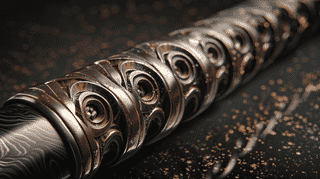
Explore the Gindo Hirumaki Tachi, a rare 12th-century National Treasure featuring unique spiral metalwork. Located at Niutsuhime Shrine near Mount Koya, this masterpiece showcases Japan's finest sword mounting craftsmanship.

The National Treasure "Kinginsakushūryōmonkyō" (Gold and Silver Inlaid Bronze Mirror with Hunting Scene Design), housed at the Eisei Bunko Museum in Tokyo's Mejiro-dai, is a bronze mirror from China's Warring States period (4th–3rd century BC). Known internationally as the "Hosokawa Mirror," its breathtaking gold and silver inlaid designs depicting a mounted hunter battling a tiger, mythical beasts, and a phoenix represent the pinnacle of ancient Chinese metalwork. This rare masterpiece is exhibited only during special exhibitions held every few years.
Discover the Kinsai Chōjū Unmon Dōban, a gold-painted bronze basin from China's Han Dynasty, housed at the Eisei Bunko Museum in Tokyo. Learn why this extraordinary archaeological artifact was designated a National Treasure of Japan.
Discover the Pigeon on a Peach Branch (Momohato-zu), a Japanese National Treasure attributed to Emperor Huizong of the Northern Song Dynasty. This exquisite silk painting from 1107 showcases the boneless (mokkotsu) technique, Slender Gold calligraphy, and a provenance tracing back to Shogun Ashikaga Yoshimitsu.
Designated as a National Treasure, Kokin Wakashū Volume 5 (Kōya-gire) is the oldest surviving manuscript of Japan's first imperially commissioned poetry anthology and a supreme masterpiece of kana calligraphy. Written around 1050 CE, this scroll of autumn poems showcases the dynamic Second Style attributed to Minamoto no Kaneyuki. Discover its profound significance, the three distinct calligraphic styles, and where to appreciate this millennium-old treasure.
Discover the Jinbutsu Gazō Kyō, a 5th–6th century bronze mirror designated as a National Treasure of Japan. Featuring a 48-character inscription with one of the earliest uses of the title "Great King," this extraordinary artifact at the Tokyo National Museum offers a rare window into ancient Japan's diplomacy, craftsmanship, and the origins of written Japanese.
Discover the Six-sided Stone Pillar (Sekidō), a National Treasure at Fusai-ji Temple in Tachikawa, Tokyo. Carved in 1361, this chlorite schist masterpiece features the Four Heavenly Kings and Niō guardians, representing the finest medieval Japanese stone art.
A National Treasure tachi forged by Sadatsugu, a master swordsmith of the Ko-Aoe school in Bitchū Province during the Kamakura period. Sadatsugu was honored as one of Emperor Go-Toba's imperial rotation swordsmiths. This blade beautifully embodies the hallmarks of the Ko-Aoe tradition, including the distinctive sumi-hada steel grain and elegant koshi-zori curvature. Privately owned in Tokyo.
A National Treasure tachi forged by master swordsmith Yoshihira of the Fukuoka Ichimonji school during the mid-Kamakura period. Passed down through the Kishū Tokugawa family, it features a magnificent chōji-midare tempering pattern and a rare chrysanthemum crest engraving. With a blade length of 73.8 cm and curvature of 2.9 cm, it exemplifies the pinnacle of Japanese sword artistry.
Discover the National Treasure tachi signed by Yoshifusa, a masterwork of the Fukuoka Ichimonji school forged in the Kamakura period. Learn about its Shimazu clan provenance, stunning jūka-chōji hamon, and where to appreciate Yoshifusa's swords in Japan.
Discover the National Treasure tachi by Rai Kunitsoshi, a rare midare-ba masterpiece from the late Kamakura period. Learn about its exquisite craftsmanship, the Rai school legacy, and how to appreciate Japanese swords in Tokyo.
Explore the Important Cultural Property tantō signed by Shintōgo Kunimitsu, founder of the Sōshū school and teacher of Masamune. Learn about this 13th-century Kamakura-period blade at Tokyo National Museum.
Discover the National Treasure tantō inscribed "Chikushū-jū Sa," a masterwork by the legendary Nanbokuchō-period swordsmith Samonji. Learn about its bold hamon, prestigious lineage among Masamune's Ten Disciples, and how to appreciate Japanese sword artistry.
Discover the National Treasure tantō signed by Nagashige of Bizen Osafune, a masterpiece of Sōshū-den swordsmithing from 1334 once wielded by the legendary appraiser Hon'ami Kōtoku.
Discover the National Treasure tantō by Rai Kunitsugu, a Kamakura-period master swordsmith counted among Masamune's famed Juttetsu. Learn about its Kishū Tokugawa provenance and how to see this rare blade in Japan.
Discover the National Treasure bone repository vessel excavated from Miyajidake Shrine — a stunning Nara-period triple-layered cinerary urn of earthenware, bronze, and blown glass housed at the Tokyo National Museum, revealing ancient Japan's cremation practices and Silk Road connections.
Discover the National Treasure gilt-bronze horse trappings excavated from the Saitobaru Kofun cluster in Miyazaki. Now housed at the Gotoh Museum in Tokyo, these exquisite 6th-century artifacts illuminate ancient Hyuga's role in East Asian diplomacy and craftsmanship.
A National Treasure dagger by Kyoto master Rai Kunitoshi, dated 1316 and made when he was about 76. Owned by Atsuta Jingu, it is shown at the Tokyo National Museum.
Discover the National Treasure "Autumn Pasture with Cattle" (Akino Bokugyu-zu), a masterpiece of Southern Song Chinese painting attributed to court artist Yan Ciping. Housed at the Sen-oku Hakukokan Museum in Roppongi, Tokyo, this exquisite silk scroll once belonged to the Ashikaga Shogun's famed Higashiyama Collection.
More from Tokyo
Tokyo’s registered properties across designations, with featured heritage and travel notes.
The complete kokuhō catalogue — browse by prefecture, period, and category.
Nationwide jūyō bunkazai — architecture, sculpture, painting, crafts, and documents.