
Nara
奈良Browse Japan’s cultural heritage from the Nara period (710 – 794). Filter by prefecture, type, and keyword, with concise stories, maps, and travel tips.

A Southern Song tea bowl in Tokyo, known as the Inaba Tenmoku. Another bowl of the very same name here was listed on exactly the same day as this one.
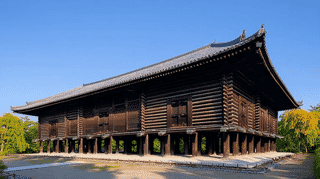
A Nara-period storehouse northwest of the Great Buddha Hall at Todaiji, the only azekura building keeping the twin-storehouse form. National Treasure since 1997.
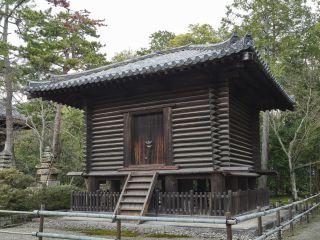
A Nara-period log storehouse in Nara Prefecture. It had stood there before the temple did, and was converted later on when the precinct was laid out here.
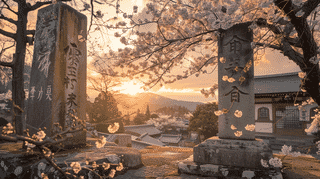
The Taga Castle Monument records Taga Castle's founding in 724 and rebuilding in 762. Once doubted as a forgery, it became a National Treasure in 2024.
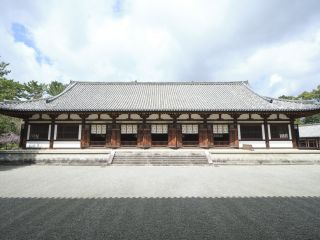
The Lecture Hall of Toshodai-ji was moved from the Heijo Palace around 760 and is the only palace building still standing, now housing Nara and Kamakura sculptures.
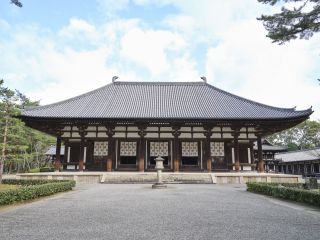
The Golden Hall of Toshodai-ji is the only surviving temple main hall from Japan's Nara era, fronting three National Treasure Buddhas beneath a shibi-crowned tiled roof.
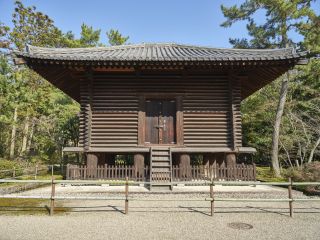
The Treasure House of Toshodai-ji is a Nara-period log storehouse built in the azekura method, standing beside the older Sutra Repository that predates the temple.

The gilt bronze epitaph of Ono no Emishi, son of the Sui envoy Ono no Imoko, found in 1613 and now at the Kyoto National Museum; a National Treasure since 1961.
Discover the Persian Manuscript in Japan, a remarkable 13th-century document brought from Song-dynasty Quanzhou by the monk Keisei. This Important Cultural Property contains Persian poetry and reveals the vibrant maritime Silk Road connections between medieval Japan, China, and Persia.
Held privately in Kyoto, this Important Cultural Property is a stone Buddhist relief dated to Kaiyuan 12 (724 CE). One of the famed Baoqing Temple group that once adorned Empress Wu Zetian's Seven-Treasure Platform in Tang Chang'an, it represents the High Tang synthesis of Indian Gupta and Chinese sculptural traditions.
An Important Cultural Property of Japan held privately in Kyoto Prefecture. This hanging scroll is a Zen ink-trace (bokuseki) brushed in 1268 by the Southern Song Chan master Wu'er Kexuan (also known as Shiqiao Kexuan), giving a verse-poem to his disciple Ming, who served as the temple's head of guests. As a precisely dated late-Southern-Song original, it is a primary document of Sino-Japanese Zen exchange and an exemplar of the calligraphy that came to be revered as the highest form of hanging scroll in the Japanese tea ceremony.
Preserved at the Kyoto National Museum, this manuscript carries the Benmeiron, or 'Discourse on Discriminating Fate,' from volume fifty-four of the Wen Xuan—the oldest surviving anthology of Chinese literature, compiled by Crown Prince Xiao Tong of the Liang dynasty. Reaching Japan by the Nara period and treasured by Heian-era aristocrats, manuscripts of the Wen Xuan reveal the deep cultural ties between Japan and continental East Asia. A meaningful destination for travelers drawn to classical Chinese thought, calligraphic beauty, and the literary world that shaped Japan's classical age.
Discover the Excavated Items from the Yokoi Temple Ruins in Yamato Province, an Important Cultural Property of Japan housed at the Osaka Museum of History. Unearthed from a long-vanished Nara-period temple in Nara City, the collection includes a gilt-bronze standing Bodhisattva, a Tang-influenced mountain-cloud double luan-bird mirror, ancient bronze coins, and other ritual metalwork that vividly evoke eighth-century Buddhist devotion.
A Southern Song-period silk painting of a quail bearing the "Zakkashitsu-in" connoisseurship seal of Shogun Ashikaga Yoshinori, this Important Cultural Property descends from the celebrated Higashiyama lineage of Chinese paintings cherished by the Ashikaga shogunal house, and is privately preserved in Tokyo as a quiet witness to Japan's medieval engagement with classical Chinese art.
Discover the Pigeon on a Peach Branch (Momohato-zu), a Japanese National Treasure attributed to Emperor Huizong of the Northern Song Dynasty. This exquisite silk painting from 1107 showcases the boneless (mokkotsu) technique, Slender Gold calligraphy, and a provenance tracing back to Shogun Ashikaga Yoshimitsu.
Discover the National Treasure bone repository vessel excavated from Miyajidake Shrine — a stunning Nara-period triple-layered cinerary urn of earthenware, bronze, and blown glass housed at the Tokyo National Museum, revealing ancient Japan's cremation practices and Silk Road connections.
Volume 78 of the Yogacarabhumi, copied in 767 for the monk Gyoshin's vow to transcribe 2,700 scrolls, finished by his disciples after he died. A twelve-metre scroll.
Calligraphy by the Southern Song Chan master Xutang Zhiyu on wax-coated paper, an Important Cultural Property prized as a tea-room scroll, privately held in Tokyo.
Discover the Tekagami (292 Leaves), a registered work of art at Tokyo National Museum. Compiled in 1861 by Edo Shogunate official painter Sumiyoshi Hirotsura, this rare album contains 292 fragments of Japan's finest ancient calligraphy spanning a thousand years from Nara to Edo periods.
Beneath the central pillar of a vanished Gango-ji pagoda lay gold, beads and eighth-century coins, unearthed in 1927 and now kept at the Nara National Museum.