
Shōwa
昭和Browse Japan’s cultural heritage from the Shōwa period (1926 – 1989). Filter by prefecture, type, and keyword, with concise stories, maps, and travel tips.
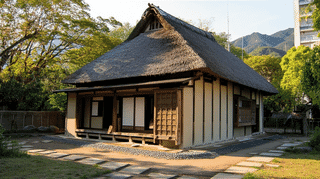
An early Showa two-story storehouse between the main house and rear annex of the Oishi home in Tanto, Toyooka, linked to both by covered passages. Registered 2011.
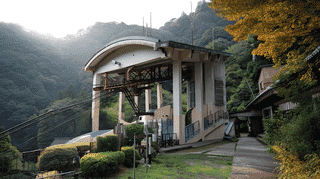
A Showa-period station building in Toyooka, Hyogo Prefecture, Japan. Its own upper floor over there carries two quite separate platforms even so today.
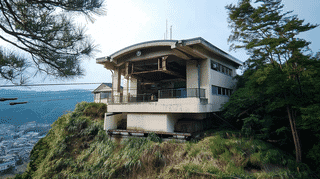
A Showa-period station building in Toyooka, Hyogo Prefecture, Japan. Only the west of its own roof over there lies quite flat, under a deck even today.
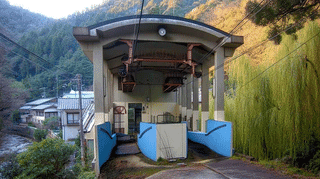
A Showa-period station building in Toyooka, Hyogo Prefecture, Japan. It combines its own steel framing over there with reinforced concrete even today.
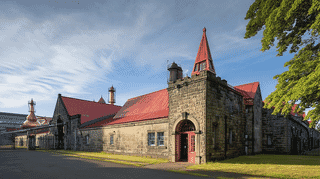
Ten Showa-period distillery buildings in Hokkaido. Their own dates differ from one building to the next, and each one of them is approximate here now.
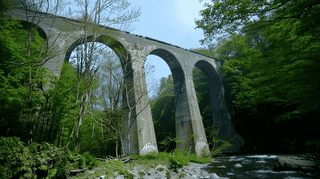
A railway bridge of ten concrete arches at Shari, Hokkaido, Japan. Finished in 1940 as work on the line stopped, it never carried a train; two piers were removed.
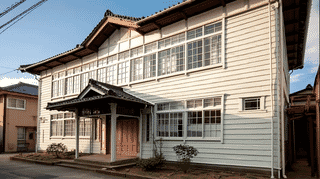
A school building of 1937 south of the Shingu Castle ruins in Wakayama, its entrance porch carrying a transom carved as an abacus. Listed as heritage in 2024.
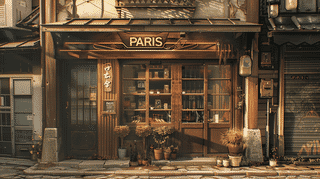
Cafe Parry on Chichibu's Banba-dori is a 1927 timber shop whose raised mortar facade makes two storeys look like three. Registered Tangible Cultural Property, 2004.
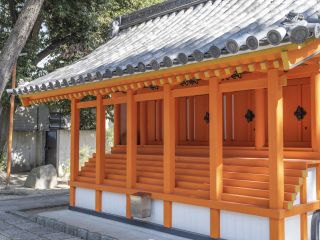
The Sumiyoshi Taisha Gosha Main Hall is a 1964 five-bay shrine in Osaka for the ancestors of seven priestly families, a wide variation among small one-bay shrines.
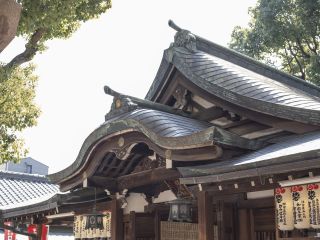
The Sumiyoshi Taisha Nankunsha Worship Hall is a 1956 hall in Osaka with a T-shaped roof and an earth floor for the crowds who come on the monthly Hattatsu days.

Held at The National Museum of Modern Art, Tokyo, this 1953 hanging scroll by Yasuda Yukihiko (1884–1978) depicts Konohana-no-Sakuyabime—the goddess of Mount Fuji and cherry blossoms from the Kojiki and Nihon Shoki. Designated a Registered Work of Art in 2019, it is recognized as one of the artist's representative masterworks of modern Nihonga.
101 objects, 19 Noh masks, 80 costumes, and 2 instruments, handed down in a Hyuga merchant family and now a Registered Art Object at the Kyushu National Museum.
A 110-metre concrete gravity sabo dam completed in 1950 on the Kamanashi River between Yamanashi and Nagano, the first and largest on the main river. Registered.
Aichi's 1938 prefectural office in Nagoya, its Western body crowned with roofs recalling Nagoya Castle; the first working main government office of its rank.
Nagoya City Hall, finished in 1933 and still in daily use, sets tiled Japanese roofs on a Western frame. Its marble atrium and 100-metre corridor are free to walk.
Built in 1936 and reopened in 2021 after eight years of repair, this Nagoya glasshouse is Japan's oldest public conservatory and an early all-welded building.
Completed in 1954 and designated in 2022, Nagoya TV Tower was Japan's first shared broadcast tower. On Naito Tachu's engineering, its seismic retrofit and visiting.
Clad in brown scratch tile, this 1928 schoolhouse on Aichi Gakuin University's Kusumoto campus in Nagoya was designed by a pupil of the architect Suzuki Teiji.
Two reinforced-concrete pillars built in 1938 still mark the entrance to Nagoya's Asahigaoka High School, a campus with roots in an 1870 school of Western studies.
Cast in reinforced concrete around 1929, the gateposts of Nagoya's Ishin High School carry Secession-style ornament and were registered as cultural property in 2017.