
Shōwa
昭和Browse Japan’s cultural heritage from the Shōwa period (1926 – 1989). Filter by prefecture, type, and keyword, with concise stories, maps, and travel tips.
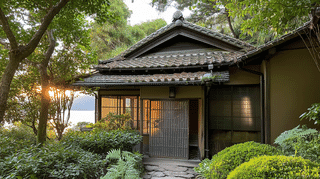
A single-storey timber tea house on a hill in Gamagori, Aichi, with a small tea room and an eight-mat guest room, built in the sukiya manner. Registered in 2022.
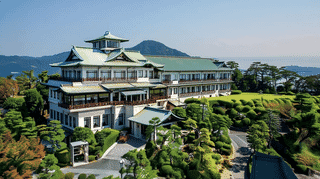
A 1934 building on a hill above Mikawa Bay in Gamagori, Aichi. A hip-and-gable copper roof sits on a concrete frame, with wings of three and two storeys.
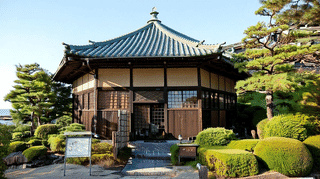
A single-storey timber building of 1936 in Gamagori, Aichi. Hexagonal, roofed in glazed blue tiles under a sacred jewel, it was a sales pavilion. Registered in 2022.
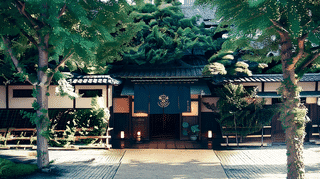
A two-storey timber building of 1950 in Nagoya, Aichi. Its rooms are set apart by corridors and narrow interstitial spaces rather than placed side by side.
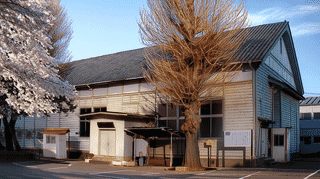
A single-storey timber hall of 1932 in Joso, Ibaraki, 541 square metres. Built as a school gymnasium and auditorium, it now serves as a martial arts hall.
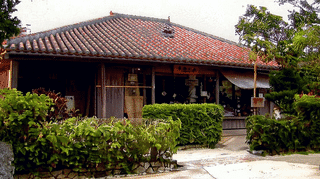
A single-storey timber house at Okinawa World in Nanjo, 127 square metres. Four rooms range along the front and three more lie behind them to the west.
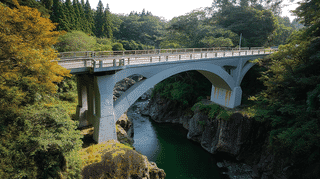
A bridge of 1939 over the Iwai River in Ichinoseki, Iwate, 61 metres long. The Agency records it as a concrete bridge with bamboo used as reinforcement.
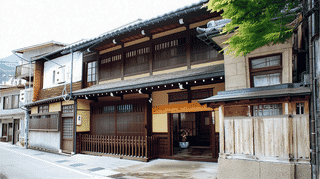
An early Showa shop and home in Kamioka, Hida, Gifu, registered in 2014. A Western reception room sits on its townhouse front, with a Japanese guest parlour behind.
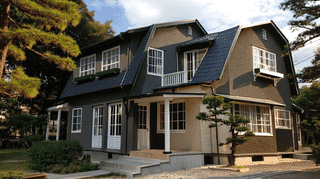
A missionary's house of 1927 at the centre of the Jiaien welfare campus in Kumamoto, with a double pentagonal gable and a large south dormer. Listed in 2007.
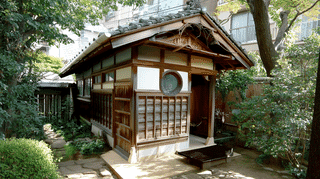
A Showa-period privy at Tano, Kochi Prefecture, Japan. Just 7 square metres, it has a hip-and-gable roof and a round window in the refined tea-house manner.
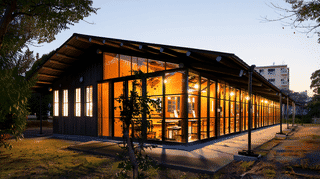
A Showa-period timber hall in Tsu, Mie Prefecture, Japan. Its own name over there is simply that of the architect who had designed it all even so now.
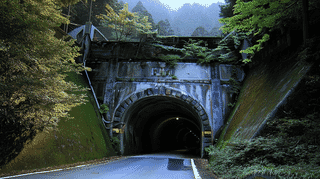
A Showa-period road tunnel in Yamanashi Prefecture, Japan. The record over there grants its own plainness first before quite stating its value even now.
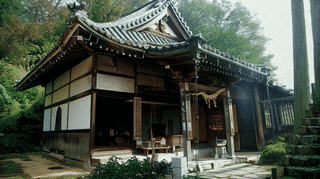
A Showa-period timber goma hall at Kannonshoji in Shiga Prefecture, Japan. It was itself built out of the old members of a much older hall there today.
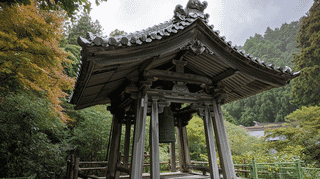
A Showa-period timber bell house at Kannonshoji in Shiga Prefecture, Japan. It shares its own structure with a bell tower at another temple even today.
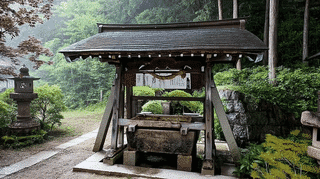
A Showa-period timber water pavilion at Kannonshoji in Shiga Prefecture, Japan. It only covers some 1.5 square metres in all of it over there even now.
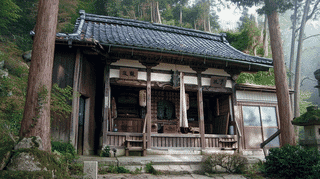
A Showa-period timber fuda hall at Kannonshoji in Shiga Prefecture, Japan. What it once enshrined over there is written of only in the past tense now.
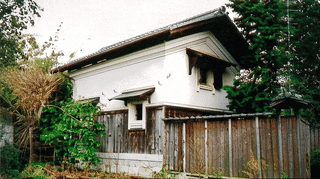
A Showa-period storehouse in Toyosato, Shiga Prefecture, Japan. Its own windows over there face a different way at each single one of its own storeys.
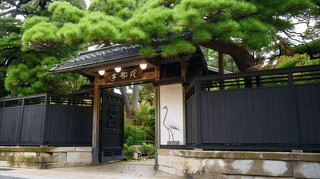
A Showa-period earthen storehouse in Niigata Prefecture, Japan. It is valued here for being well loved as a view from the very road out there even so.
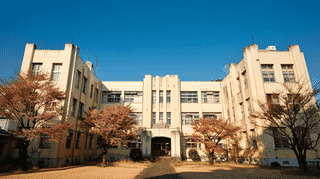
A school building of 1938 at Ooka in Yokohama, raised as the main block of a technical college and in use as a junior high school since 1981. Listed in 2000.
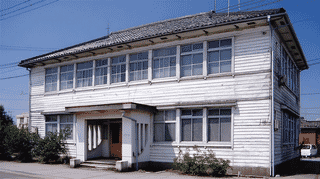
Toita Hall in Kanazawa is a two-storey timber village office of 1940, with clapboard walls and a mortar porch, registered in 2008 for its place on the Kanaiwa road.