
Heian
平安Browse Japan’s cultural heritage from the Heian period (794 – 1185). Filter by prefecture, type, and keyword, with concise stories, maps, and travel tips.
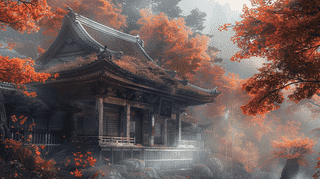
Burakuji Temple Yakushi Hall in Otoyo, Kochi, built around 1151, is the oldest building in Shikoku. Its interior can be viewed by reservation for 500 yen.
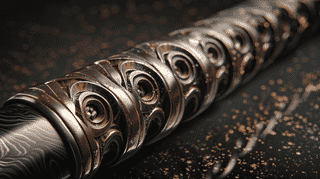
A Heian tachi mounting of Niutsuhime Shrine, spiral-wrapped in silver-plated copper with gilt fittings; the blade is lost. National Treasure, 1955; kept in Tokyo.
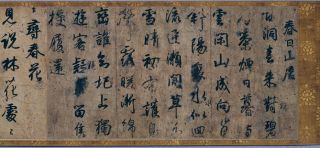
Discover Byōbu Dodai, a National Treasure calligraphy scroll by Ono no Michikaze, written in 928 as a draft for imperial folding screens. Housed at the Sannomaru Shōzōkan in Tokyo, this rare Heian-period masterpiece marks the birth of Japan's native wayō calligraphy style. Learn its history, highlights, and how to visit.
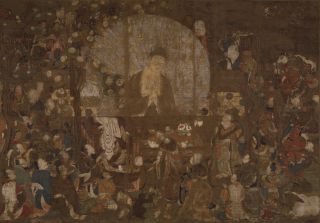
This late-Heian National Treasure at the Kyoto National Museum shows the dead Buddha rising from his golden coffin to preach a last sermon to his mother, Queen Maya.
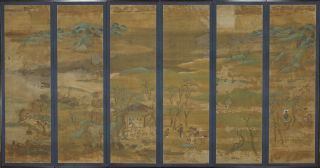
The only screen painting surviving from Japan's Heian period, this 11th-century National Treasure from To-ji temple may depict the Tang poet Bai Juyi at his retreat.
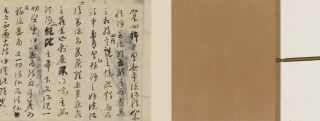
Kūkai's own ninth-century draft preface to the Diamond Sutra, at the Kyoto National Museum. Sixty-three lines whose deletions catch this monk mid-thought.
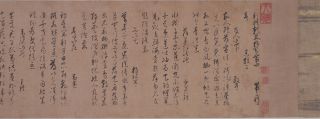
Forty Tang poems by Li Bai, Wang Wei, and others fill this 5.5-meter ninth-century cursive scroll at the Kyoto National Museum, a National Treasure since 1962.
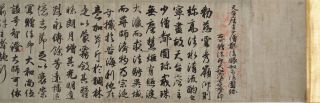
An imperial decree of 927 granting Enchin the posthumous title Chishō Daishi, its privy seal pressed thirteen times over text brushed by Ono no Michikaze.
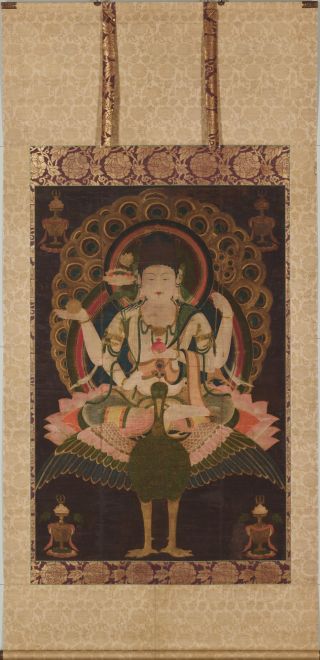
A National Treasure at the Tokyo National Museum, the only Peacock Wisdom King painting left from Heian Japan, admired for its gentle deity and refined gold work.
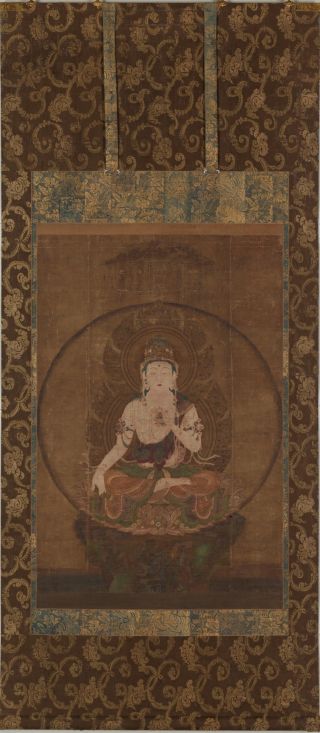
The oldest surviving painted image of Kokūzō in Japan, this 12th-century silk scroll at the Tokyo National Museum is admired for its fine cut-gold kirikane work.
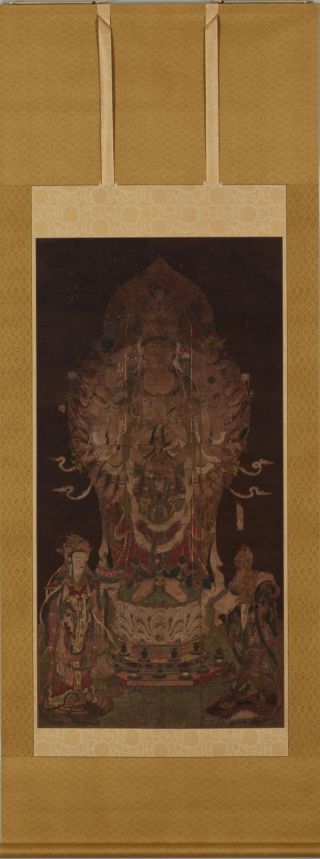
A late-12th-century National Treasure of Senju Kannon at the Tokyo National Museum: forty-two arms ringed by small hands, the silk worked in fine gold kirikane.
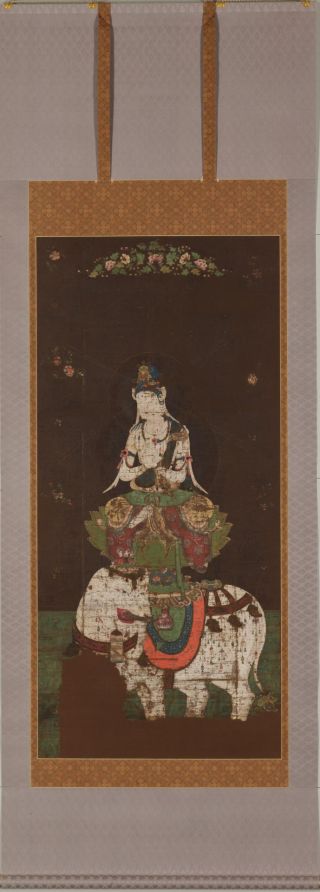
A 12th-century Heian National Treasure at Tokyo National Museum, this silk scroll depicts Fugen Bosatsu on a six-tusked white elephant amid fine cut-gold ornament.
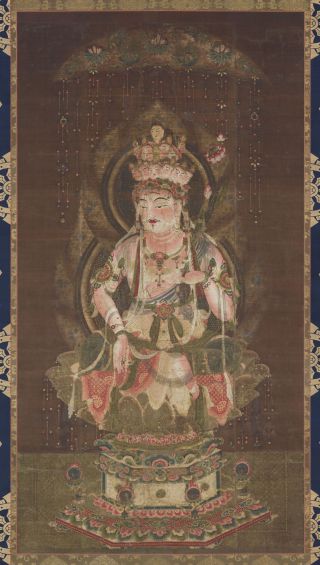
Discover the National Treasure 'Silk-Painted Image of the Eleven-Headed Kannon' at Nara National Museum — a 12th-century Heian-period masterpiece on silk. As one of Japan's oldest surviving silk paintings of this form of Kannon, it features an unusually naturalistic three-quarter pose, exquisite cut-gold-leaf (kirikane) decoration, and motifs newly introduced from Song-dynasty China. This guide covers the painting's iconography, history, and how to plan your visit to the museum in Nara Park.
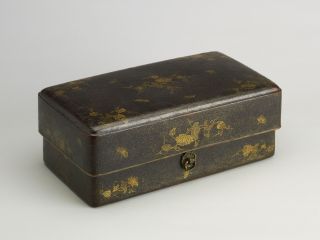
Discover the Lotus Arabesque Maki-e Sutra Box, a National Treasure from the late Heian period housed at Nara National Museum. Crafted in the exceptionally rare lacquered-leather (shippi) technique and adorned with togidashi maki-e, this elegant container once preserved decorated sutras at Jingū-ji in Fukui.

A collection of 2,435 Shingon ritual manuscripts handed down at Kajuji in Yamashina, Kyoto, spanning the 11th to 19th centuries and designated in 2020.
A late-Heian tale of the Fujiwara regents and Michinaga's glory. The six-volume Tosho-bon in Aichi is an early copy, an Important Cultural Property since 1953.
A surviving album of the Kokin Wakashu, Japan's first imperial poetry anthology, written on decorated paper and known as Sujikiri for its silver ruling lines.
Discover the Sekido-bon Kokin Wakashū, a National Treasure of Japan featuring exquisite 11th-century kana calligraphy on richly dyed paper. Learn about its history, artistry, and where to view fragments at museums in Nagoya, Tokyo, and New York.
A Heian fragment of the Kokin Wakashu carrying travel poems 416 and 417 on two sheets of waxed Chinese paper. Designated in 1959; privately held in Aichi.
An Important Cultural Property in Aichi, this Sunshōan Shikishi sets a Heian winter poem from the Kokin Wakashū in flowing kana on imported mica-printed paper.