
Heian
平安Browse Japan’s cultural heritage from the Heian period (794 – 1185). Filter by prefecture, type, and keyword, with concise stories, maps, and travel tips.
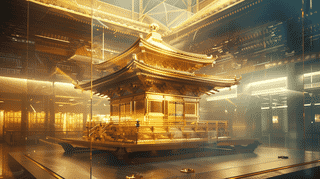
The Golden Hall of Chusonji in Iwate, built in 1124, is lacquered and gilded inside and out, with four Fujiwara coffins beneath its altars. A National Treasure.
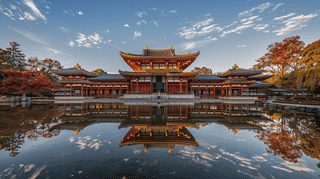
The Phoenix Hall of Byodoin in Uji, built in 1053, is four symmetrical buildings, a central hall, two floorless wings and a tail, facing a pond as a Pure Land palace
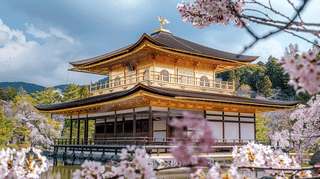
A Buddhist hall at Daigoji in Kyoto, moved here from Yuasa in Kishu between 1598 and 1600. Its year of building is unknown; the largest surviving late Heian work.
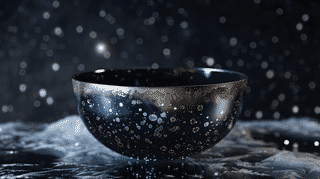
A Southern Song Jian bowl at the Museum of Oriental Ceramics in Osaka, silver spots packed tightly across both surfaces. Once owned by the regent Hidetsugu.
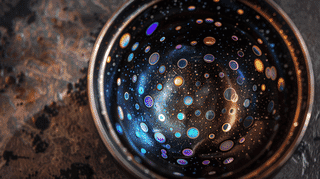
A Southern Song tenmoku bowl at the Fujita Museum in Osaka, its black glaze scattered with haloed spots. Alone among yohen bowls, it is mottled inside and out.
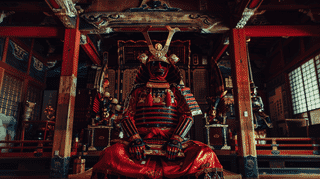
A Heian-period great armour at Musashi Mitake Shrine in Tokyo. The Agency calls it the finest work in Kanto; Meiji repairs took the colour from its lacing.
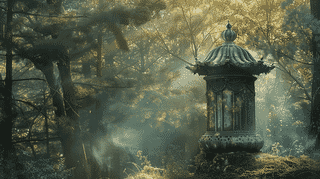
Finds from sutra mounds at Kuramadera in Kyoto, over twenty entries including three reliquary pagodas. Inscriptions show deposits made over 140 years from 1120.
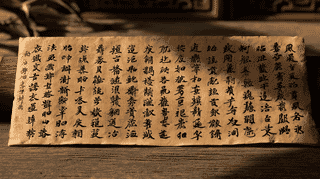
A Chinese calligraphy album in Kyoto Prefecture, the Thousand Character Classic written twice in two scripts. The Agency leaves the maker field blank.
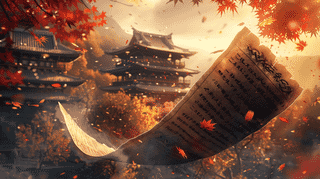
A Heian manuscript in Kagawa Prefecture recording the gazetteer of Hizen, now Saga and Nagasaki. One of five surviving fudoki. National Treasure since 1955.
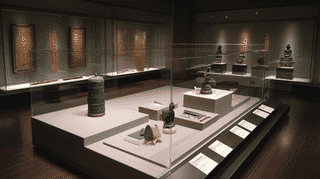
Finds from sutra mounds at Kyogamine on Mount Asama in Ise, Mie, listed mound by mound. Inscriptions date them between 1159 and 1173. National Treasure since 1963.
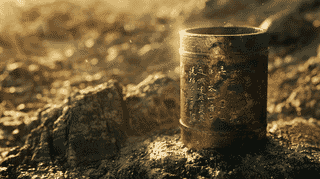
Finds from a sutra mound in Yurihama, Tottori, designated as a single lot. An inscription shows the monk Kyoson raised the mound in 1103, awaiting Maitreya.
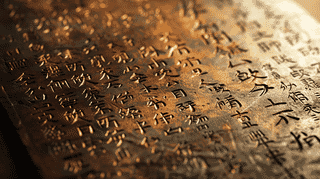
Heian copper plates found on Mount Kubote in Fukuoka, now at the Kyushu National Museum. Made in 1142; the images on their box are a rare pictorial source.
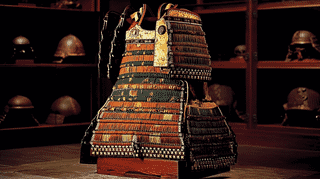
A Heian great armour at Oyamazumi Shrine in Ehime, laced in three colours to form an arrowhead plant. The Agency calls it the oldest armour surviving.
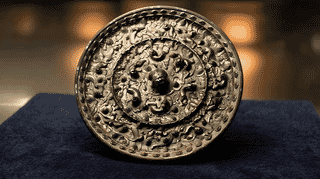
A Tang bronze mirror at Oyamazumi Shrine in Ehime, 26.8 centimetres across. A grapevine forms the ground beneath birds and beasts. National Treasure since 1953.
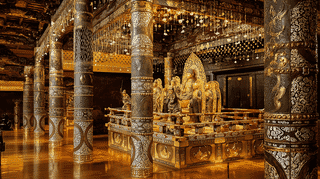
Heian ritual objects in the Golden Hall of Chusonji, Iwate, listed as fourteen items. What is designated is the equipment inside, not the hall itself.
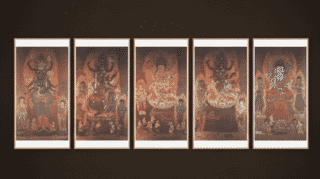
Five Heian scrolls at Kishinji in Ono, Gifu. Only three complete sets survive from before the Kamakura period, and two of these scrolls carry a date on them.
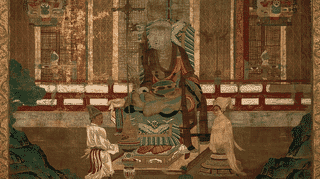
A Buddhist painting in sixteen scrolls owned by Seiryoji in Kyoto. The record gives its country as Song and its period as Northern Song, not as Japan.
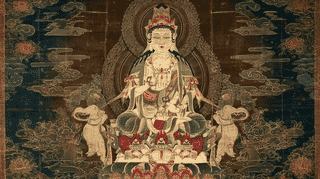
A Heian Buddhist painting on one scroll, owned by Matsunoodera in Maizuru, Kyoto. The whole of its official commentary runs to a single short sentence.
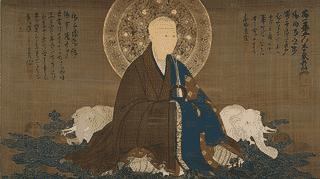
A Southern Song painting on one scroll at Tofukuji, Kyoto, showing the full figure. It came down in a single box with a second scroll of the same title.
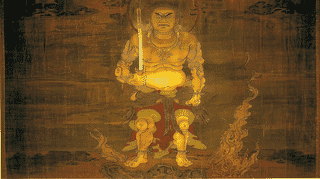
A Heian-period Buddhist painting on one scroll at Manshuin in Kyoto. Works of the very same name are listed by a prefecture and by a city as well as nationally.