
Historic Sites, Places of Scenic Beauty, and Natural Monuments of Japan
史 跡 名 勝 天 然 記 念 物Browse Japan’s Historic Sites, Places of Scenic Beauty, and Natural Monuments nationwide. Filter by prefecture, period, and category, with concise stories, maps, and practical travel tips.
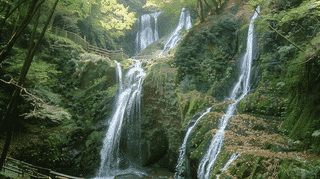
A seven-step waterfall on the Atera River in Shinshiro, Aichi, dropping 62 metres in all. Designated in 1934 for its conglomerate bed and deep potholes.
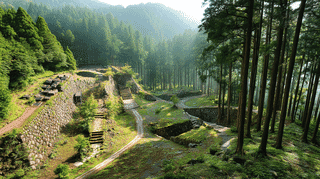
The site of a Tendai Vinaya temple in the hills of Kihoku, Ehime. Some twenty terraces cut into a valley remain, with a retaining wall 6 metres in height.
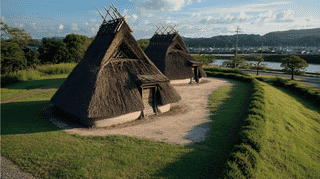
A settlement site in Setouchi, Okayama, running from the early Yayoi to the Kamakura period. Its shell mound gave its name to a type of Yayoi pottery.
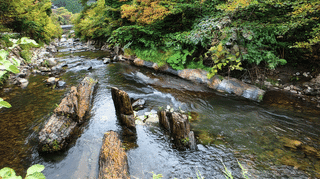
Petrified wood exposed in the beds of the Mabechi and its tributaries in Ichinohe, Iwate. Its species match those of the forest that grows there today.
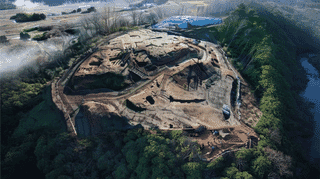
A large defended settlement of the later 4th century in Kurihara, Miyagi. Mirrors and ironwork came from pit dwellings that appear to have been burned.
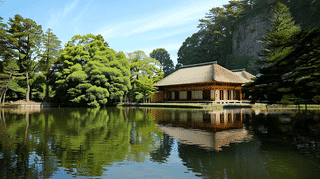
An Edo-period school and its garden at Iwadeyama in Osaki, Miyagi. The Agency for Cultural Affairs calls it the oldest surviving school building of that age.
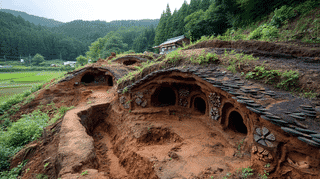
A Nara-period tile kiln site in Osaki, Miyagi, which supplied the first Taga Castle. Excavation from 2021 found six kilns for tiles and one for charcoal.
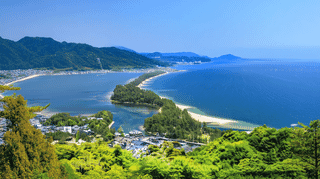
A sandspit at Miyazu, Kyoto, listed in 1922 and raised in 1952. Three criteria were applied, one of them naming it a point to view the place itself from.
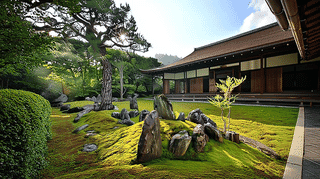
A flat garden of about 165 square metres in Kita Ward, Kyoto. A hedge closes off its background, and all of its stones are kept deliberately small in scale.
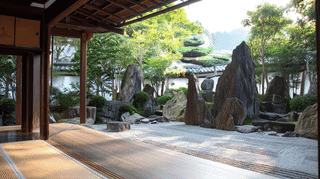
A garden in Kita Ward, Kyoto, covering the ground around the study garden and the abbot's hall garden, the latter of them plain in the extreme indeed.
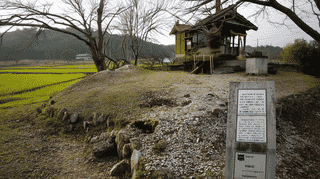
Jomon-period shell mounds in Kumamoto Prefecture. One of the two came to light just where a river in flood had scoured out a paddy field down there.
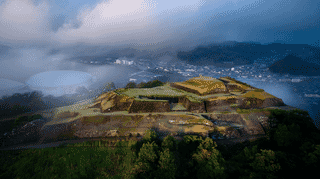
A castle site in Kumamoto Prefecture. Its stone walls were pulled down twice over, the second time because the first had not gone nearly far enough at all.
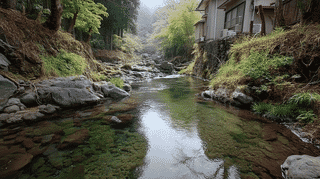
A natural monument in Kumamoto Prefecture: a stretch of river in which a rare freshwater red alga grows upon the very stones of the riverbed down there.
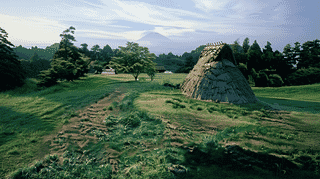
A Jomon-period site in Kumamoto Prefecture. Material and waste abound here but the finished tools are few, because they all went elsewhere in the end.
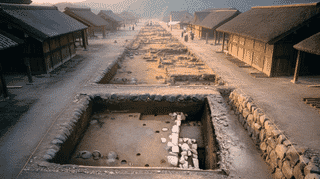
The seat of an ancient province in Fuchu, Hiroshima Prefecture, Japan. It shows the whole course over there from its own rise to its own decline even now.
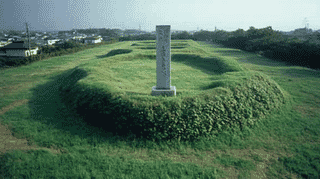
A late Jomon settlement in Iwatsuki Ward, Saitama City, where a ring of shells 150 metres across sits beside a waterlogged peat site. Designated in 1975.

The surviving buildings of a domain school founded in Iga in 1821 as a branch of the Tsu academy Yuzokan. Designated a Historic Site in 1930 and open to visitors.
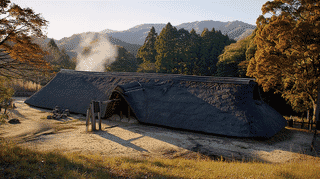
An Early Jomon settlement at Yonezawa, Yamagata Prefecture, Japan. Its pit dwelling of 43.5 metres is the longest in Japan, and unfinished stone tools abound.
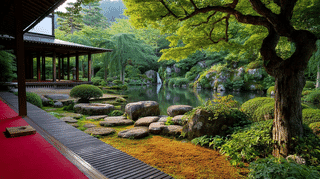
A temple garden at Tsuruoka, Yamagata Prefecture, Japan. Made in 1455 and repaired in 1648, it joins five ponds with three islands and is planted around yew.
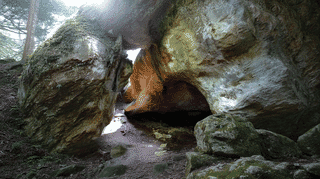
A cave site in Takahata, Yamagata Prefecture, Japan. Of its own two caves over there, the lower one has yielded most of the finds even so even now today.
More across Japan
The complete kokuhō catalogue — browse by prefecture, period, and category.
Nationwide jūyō bunkazai — architecture, sculpture, painting, crafts, and documents.
UNESCO-inscribed cultural and natural sites across the archipelago.