
Edo
江戸Browse Japan’s cultural heritage from the Edo period (1603 – 1868). Filter by prefecture, type, and keyword, with concise stories, maps, and travel tips.
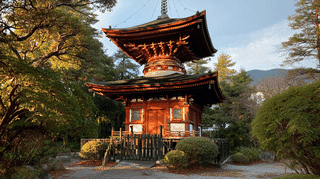
An early Edo-period Buddhist pagoda in Kashihara, Nara Prefecture, Japan. It stands on the great foundations there that are some 1000 years older still.
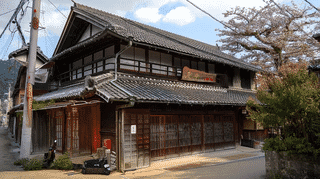
The main house of a former inn before the gate of Taimadera at Katsuragi, Nara Prefecture, Japan. A crane and pine in plaster and carved jewels give it a lively air.
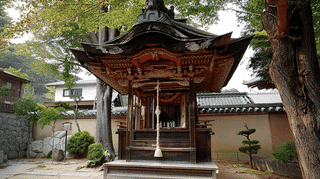
The guardian shrine of Nakanobo at Taimadera, Katsuragi, Nara Prefecture, Japan. Just 1.4 square metres, it has two kinds of gable and colour over the whole.
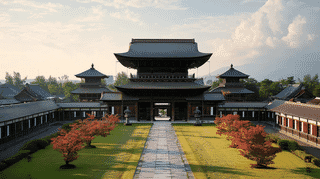
A Soto Zen temple in Toyama Prefecture. Timber taken out during the repairs there was made into a small vessel, and that too is recorded here separately.
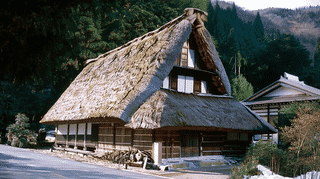
An Edo-period gassho-zukuri farmhouse in Nanto, Toyama Prefecture. The two separate records there narrow down its own date very differently even today.
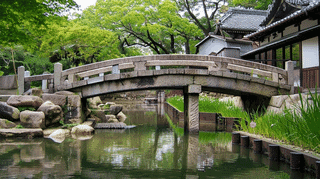
An Edo-period stone girder bridge in Nishinomiya, Hyogo Prefecture, Japan. It only runs just 6.0 metres from the one end of it to the other side of it.
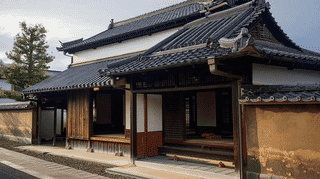
Three mid-Edo-period buildings in Kinokawa in Wakayama Prefecture. The place name bracketed in its own title there is still an older one even now today.
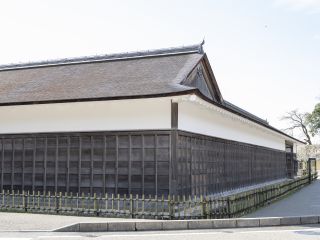
Built around 1700 inside Hikone Castle, this shingled L-shaped stable kept rows of standing bays for the lord's horses. No comparable building survives in Japan.
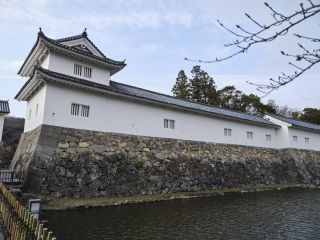
Rebuilt in 1771 after a fire, this long turret walled one side of the Sawaguchi gate enclosure at Hikone Castle. Its blunt north gable marks a lost gatehouse.
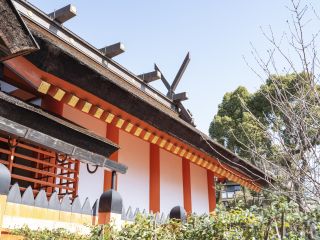
Built in 1708, the main hall of Daikai Shrine at Sumiyoshi Taisha is the oldest surviving Sumiyoshi-zukuri sanctuary, predating the National Treasure halls.
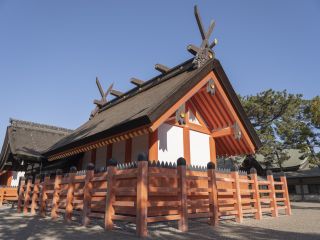
The Sumiyoshi Taisha Main Hall in Osaka is four National Treasure sanctuaries rebuilt in 1810 in the archaic Sumiyoshi style, all facing west like a fleet.
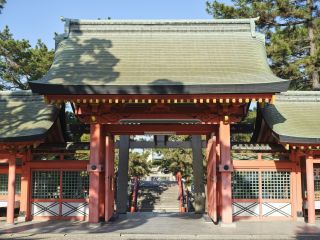
The Sumiyoshi Taisha Kojumon Gate is the early Edo four-legged gate fronting the main sanctuary in Osaka, with an unusual stack of beams and struts above its doors.
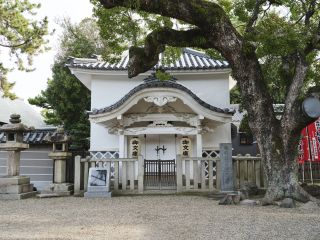
The Sumiyoshi Taisha Obunko Library is a storehouse built around 1723 by booksellers of Osaka, Kyoto and Edo to hold books, called the oldest library in Osaka.
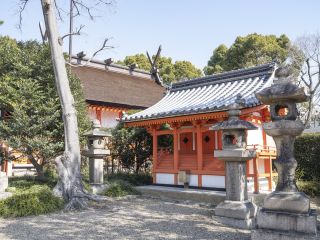
The Sumiyoshi Taisha Shiga Shrine Main Hall in Osaka is a late 17th-century three-bay shrine for the three sea gods, among the oldest buildings in the grounds.
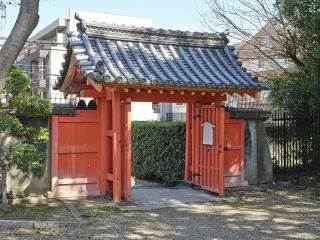
The Sumiyoshi Taisha Daikai Shrine North Small Gate is a late Edo munamon gate in Osaka, paired with a south twin to frame the front of the Daikai subsidiary shrine.
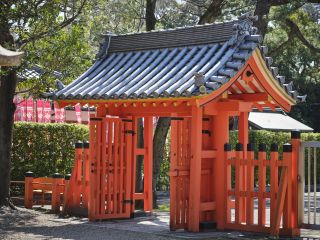
The Sumiyoshi Taisha Daikai Shrine South Small Gate is a late Edo munamon gate in Osaka, moved around 1881, paired with a north twin at the front of Daikai Shrine.
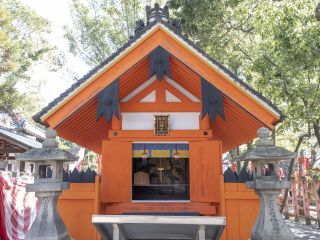
The Sumiyoshi Taisha Wakamiya Hachimangu Main Hall in Osaka is a one-bay shrine of about 1810, the main halls in miniature, with pine and doves on its doors.
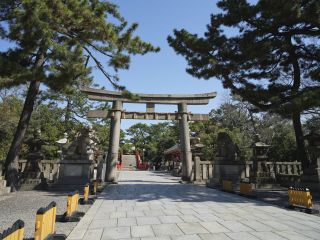
The Sumiyoshi Taisha West Great Torii Gate is the stone Myojin torii at the shrine's main entrance, 6.1 m wide and 6.4 m high, facing the Sumiyoshi Toriimae tram.
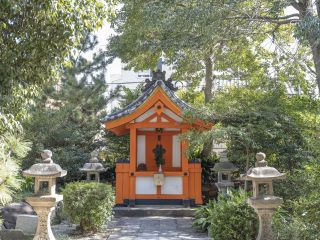
The Sumiyoshi Taisha Godosha Main Hall is a late Edo one-bay shrine deep in the garden in Osaka, dedicated to the god of the land, in small-scale Sumiyoshi style.
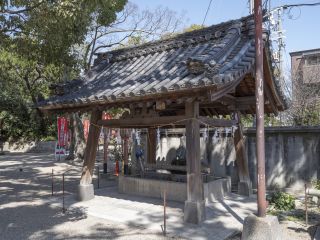
The Sumiyoshi Taisha South Temizuya Pavilion is a late Edo water pavilion in Osaka with fan rafters, projecting brackets and a coffered ceiling, ornate for its size.