
Shōwa
昭和Browse Japan’s cultural heritage from the Shōwa period (1926 – 1989). Filter by prefecture, type, and keyword, with concise stories, maps, and travel tips.
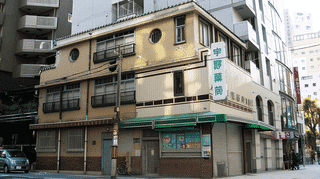
A Showa-period shop on a street corner in Chuo Ward, Osaka, Japan. A timber building with a tiled front in the signboard style, it bears green Spanish tiles above.
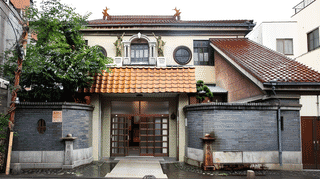
A Showa-period public bathhouse in Ikuno Ward, Osaka, Japan. Divided at the attendant's seat, with statues on its front, it was recorded in use but closed in 2019.
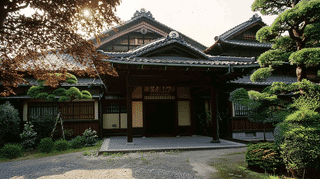
The Shotokukan Main House in Higashiosaka is timber merchant Mori Heizo's 1939 home, Japanese outside, with rooms mixing Japanese and Western design in prized wood.
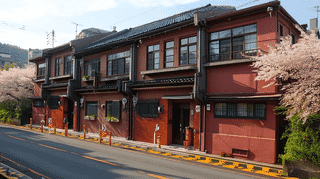
A Showa-period row house in Osaka, Japan. Concrete below and timber above over there even now, following the slope of the ground itself even so today.
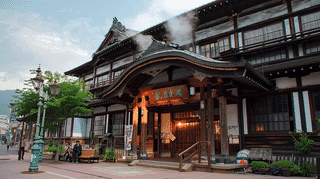
A Showa-period public bath in Beppu, Oita Prefecture, Japan. Its own three parts over there each still carry a roof of their very own form even today.
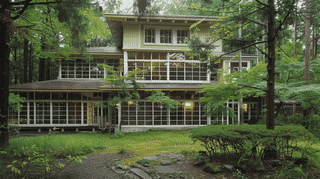
A Showa-period summer villa at Karuizawa, Nagano Prefecture, Japan. Its west face is glazed on both floors with a sunroom behind, an early work of timber modernism.
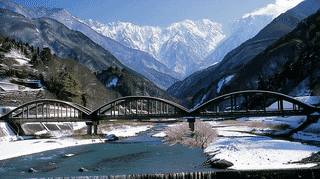
A Showa-period road bridge at Oshika, Nagano Prefecture, Japan. Its road runs beneath three concrete arches tied to the girders, a fine example of a common type.
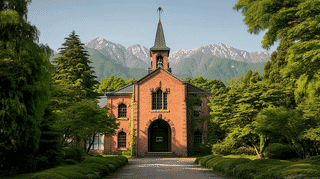
A Showa-period museum building in Azumino, Nagano Prefecture, Japan. It takes the outward shape of a Christian church over there even so even now today.
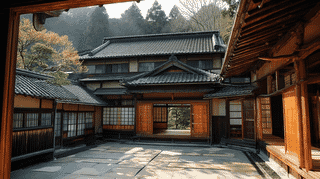
Eight Taisho- and Showa-period buildings in Tottori Prefecture. Their own floor areas there are written out in full in Chinese numerals even now today.
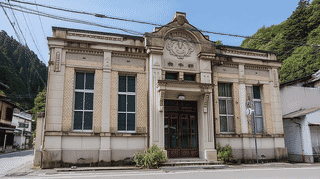
A Showa-period bank building in Hino, Tottori Prefecture, Japan. Its own front over there is quite set out in the members of the West even so even now.
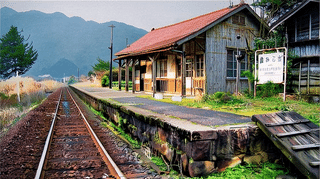
Wakasa Railway Hayabusa Station, a 1929 timber building with a 97-metre platform, was briefly the terminus in 1930 and keeps its original waiting room and walls.
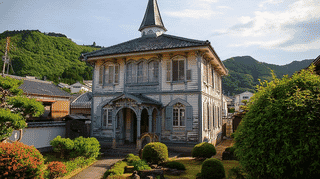
The priest's house at Tsuwano Catholic Church in Shimane is a timber building of 1917 in 2 storeys, slate-roofed and clad differently on each floor. Registered 2010.
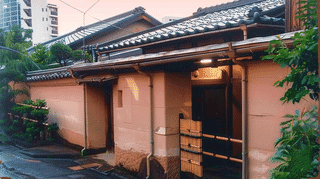
The front gate of Ohashi Saryo, a tea house at Toranomon, Tokyo, Japan. Framed in logs in the tea-house manner under a tiled roof, it is valued for its plain calm.
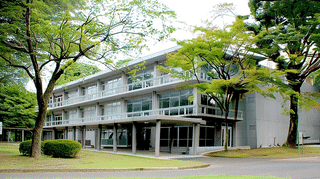
A Showa-period auditorium and student hall at ICU, Mitaka, Tokyo, Japan. Designed by the Vories office, it sets broad glass and early aluminium sashes round a court.
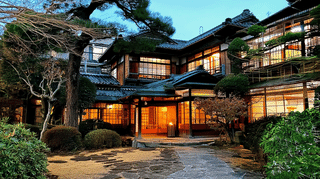
A Showa-period timber main house in Shirokanedai, Tokyo, Japan. Its own tatami rooms over there all run westward there in three quite offset sets now.
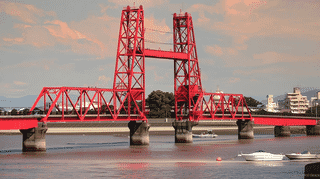
A Showa-period lift bridge between Fukuoka and Saga Prefectures. It was registered first there and it was only ever designated later on than that one.
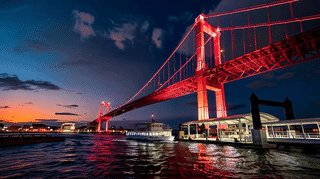
A Showa-period steel suspension bridge in Kitakyushu, Fukuoka Prefecture. Reading glosses sit right within its own commentary there in round brackets.
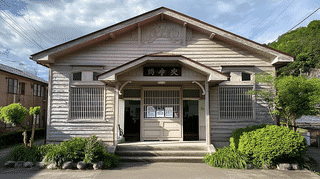
A Showa-period former bathhouse in Fukuoka, Japan. Western in its own outward form over there, and yet plainly a bathhouse within it even so now today.
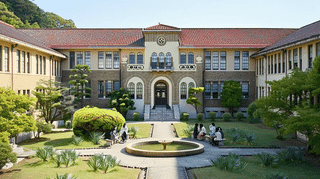
Twelve Showa-period school buildings in Hyogo Prefecture. Three of them, with their own two corridors, are counted together as just a single one here.
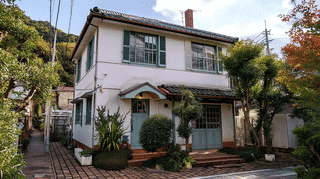
A Western-style house among the old foreign residences of Kitano, Kobe, Japan. Its living and dining rooms run as three with a fireplace, a fine early Showa example.