
Meiji
明治Browse Japan’s cultural heritage from the Meiji period (1868 – 1912). Filter by prefecture, type, and keyword, with concise stories, maps, and travel tips.
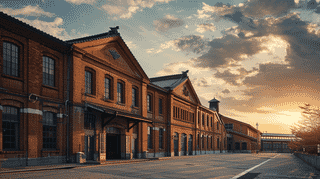
The Former Tomioka Silk Mill in Gunma opened in 1872 as a state reeling mill. Its 140-metre reeling hall and two 104-metre cocoon warehouses are National Treasures.

A Southern Song Jian bowl at the Museum of Oriental Ceramics in Osaka, silver spots packed tightly across both surfaces. Once owned by the regent Hidetsugu.

A Southern Song tenmoku bowl at the Fujita Museum in Osaka, its black glaze scattered with haloed spots. Alone among yohen bowls, it is mottled inside and out.
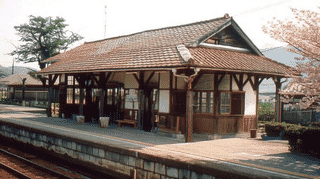
A single-storey timber station of 1900 in Okayama, 84 square metres. Of its seven bays, two and a half at the south end serve as the waiting room today.
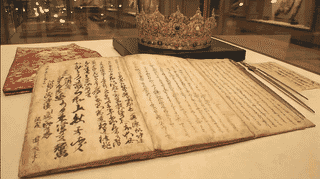
The Sho family's material at the Naha City Museum of History, 1,292 items. Other archives burned or were destroyed; what had been kept in Tokyo survived.
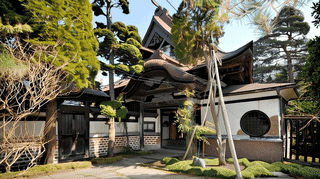
A residence in the former castle town of Mizusawa, Iwate, seven buildings in all. The main house of 1888 is finished with painted panels and shell-flecked plaster.
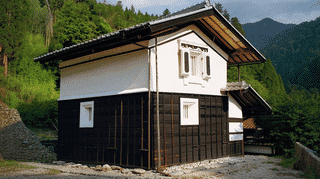
An earth-walled storehouse of 1892 in Gero, Gifu, just 21 square metres. A single line of black plaster crosses its white wall high up, sharpening it.
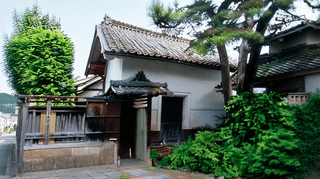
The smallest of seven registered Imabayashi buildings in Miyazu, a Meiji store with white plaster, a boarded base and fan-set rafters like 3 others. Registered 2002.
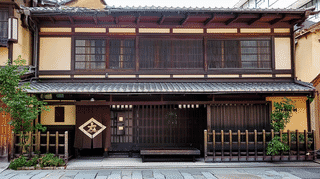
A Meiji townhouse on Shinmachi-dori in Kyoto, 180 square metres. Its ground-floor front divides in three: a doorway, a display board and a lattice bay.
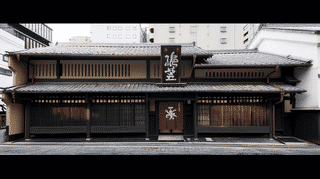
A shop of 1883 on Oike-dori in Kyoto, 80 square metres. Its plan wraps in an L around a storehouse that is itself registered quite separately from it.
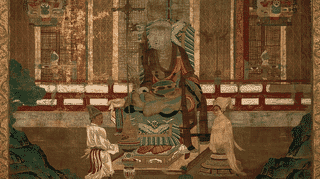
A Buddhist painting in sixteen scrolls owned by Seiryoji in Kyoto. The record gives its country as Song and its period as Northern Song, not as Japan.
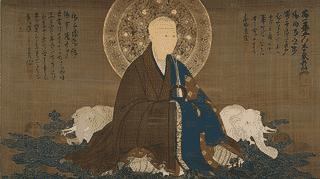
A Southern Song painting on one scroll at Tofukuji, Kyoto, showing the full figure. It came down in a single box with a second scroll of the same title.
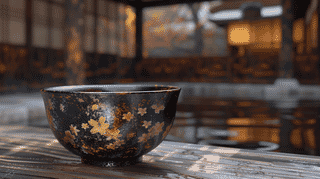
A Southern Song tea bowl held at Shokokuji in Kyoto Prefecture. On the inside, the pattern is formed exactly where the upper glaze was simply left off.
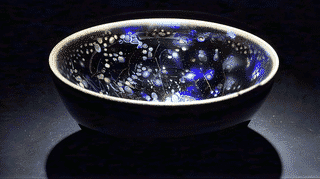
A tea bowl held at Ryukoin in Kyoto Prefecture. Yet another bowl of the very same name is recorded there under a different system of listing altogether.
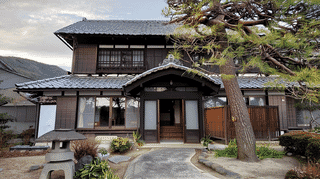
A Meiji-period timber main building in Tamamura, Gunma Prefecture, Japan. It once served as both a house and as a doctor's very own surgery in it too.
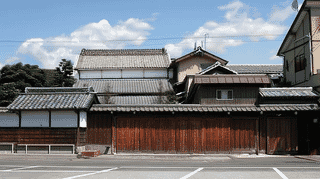
A Meiji-period main house in Kiryu, Gunma Prefecture, Japan. Its grounds meet the main street, yet the house is unseen from it; the family's looms stood elsewhere.
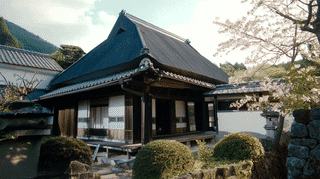
A Meiji-period main house in Manno, Kagawa Prefecture, Japan. Eaves run round all four sides, and one formal room also serves as the altar room there.
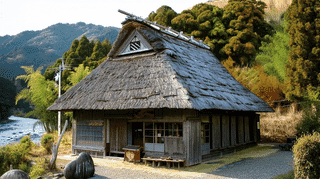
A thatched Meiji-period farmhouse at Shimanto, Kochi Prefecture, Japan. Moved from a mountain hamlet in 1990, its plan divides into three parts along its length.
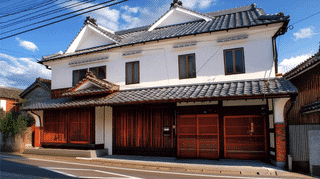
A Meiji-period town house at Kashima, Saga Prefecture, Japan. Its walls are plastered white over hidden posts in the local style, with ebony in its reception room.
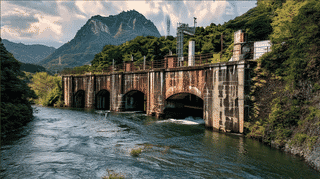
A Meiji-period hydroelectric installation in Yamanashi Prefecture. Its own structures there are recorded under two quite different owner names even now.